One Night in Frankfurt: Scenes From the Incomparable Heinrich Maria Ledig-Rowohlt Translation Prize Dinner

Story summary
Forty years ago in October 1986 I attended my first Frankfurt Book Fair. On the first day of meetings my friend and colleague Gary Fisketjon and I were introduced to Heinrich Maria Ledig Rowohlt, an elegant, charismatic 78-year-old German publisher
📌 Key Highlights & Takeaways
- Forty years ago in October 1986 I attended my first Frankfurt Book Fair.
- On the first day of meetings my friend and colleague Gary Fisketjon and I were introduced to Heinrich Maria Ledig Rowohlt, an elegant, charismatic 78-year-old German publisher
Forty years ago in October 1986 I attended my first Frankfurt Book Fair. On the first day of meetings my friend and colleague Gary Fisketjon and I were introduced to Heinrich Maria Ledig Rowohlt, an elegant, charismatic 78-year-old German publisher who we had vaguely heard of because his family publishing house Rowohlt Verlag is one of the most distinguished literary publishers in Germany. Ledig asked about authors we were publishing and regaled us with stories of drinking with Hemingway in Berlin, accompanying Thomas Wolfe to the Olympic Games in 1936, and generally welcomed us warmly into the community of international publishers. He became a friend and mentor and I always looked forward to our annual meeting in the lobby of the Hessicherhof Hotel during the book fair.
After Ledig died a foundation was established by his wife Jane that since 1996 has awarded prizes to translators for the important work they do. Each year, on Friday night, the last day of the fair, there is a lovely dinner where the winners are recognized. It is one of my favorite nights of the fair both because I sit and remember my friend Ledig but also because after a week of nonstop business and publishing news and gossip and more business the translation dinner is a moment to slow down, put the business aside and reflect on what is at the center of what we all do: the literary text. And of course to celebrate the extraordinary work that the dedicated translators do to bring authors’ work to a new language and a new audience.
Every year there are wonderful speeches that are insightful, amusing, and often very moving and remind me that I am lucky to do what I do. To give a flavor here are two from a previous year: the laudatory by Jo Lendle, the excellent publisher of Hanser Verlag, introducing Stephan Kleiner who has translated among others Irvine Welsh, Keith Gessen, Michel Houellebecq, Tao Lin and Charlie Kaufman; following that is Stephan’s charming acceptance speech.
Note: if you are a young international publisher who attends the fair reading this you should reach out to Karsten Kredel who oversees the prizes and see if you can snag an invitation one year. And if you want to know more about the prizes and the foundation you can go to the Heinrich Maria Ledig-Rowohlt Foundation website.
We’ve got you now! You wanted to be an outsider, dear Stephan, a lone wolf, who shuns the pack. A distant planet circling the bright, hot light of the business on an outer orbit, emitting a reflective brightness to the centre, while not denying some residual powers of attraction. The observer at the edge of the dance-floor, secretly swaying with the rhythm. But you didn’t include us in your calculation. Your pack, gathered here as the primed, spruced-up inner circle of the business, has ordered you, through the panel of judges, to make an appearance. There you are, wishing yourself far away, but we won’t let you.
By employing the means of an all-out embrace strategy we are bringing you into the fold, to the centre of the mosh pit. Free hugs are the thing of yesterday, today there are paid hugs. You deserve both, the hugs AND the money. I am sorry, but you won’t be able to get away from this embrace. Welcome to the Heinrich Maria Ledig-Rowohlt cage, our admiration the grille behind which you sit. Still, it is a roomy cage, there is space to roam around in.
You deserve this award. The translations you have produced in the last one and a half decades are impressive, no hide can carry the load—a quick preview of the leathery metaphor to come later. In the beginning, in 2009, the double hit: Tao Lin’s “Gute Laune” ( Eeeee Eee Eeee ) and Keith Gessen’s “All die traurigen jungen Dichter” ( All the Sad Young Literary Men )—from the beginning you were master of the whole range of tones and moods.
For the next seven years your list of translations referenced a certain DuMont Verlag. That is not accidental, after all, you were editor there. A true master of sushi also spends seven years boiling rice in the back room. But you were not content with this, from the beginning you got out the knife and rolled and chopped the true makis.
Editorial Text & Content Analyzer
Analyze real-time word count, reading speed, and text density metrics on the fly.
Source: Literary Hub.
Read the full story at the original source ↗
For questions: mrsmithcons@gmail.com.
❓ Frequently Asked Questions (Author Craft Briefing)
What core principle or progressive framework underpins this Author Craft guide?
Whether analyzing biomechanical motor recruitment for bodyweight leverage or structural narrative arcs in fiction, success relies on progressive progressive mastery of foundational fundamentals.
How should practitioners structure their training or reading schedule?
Implement structured 4-to-6 week periodization blocks with scheduled deloads or chapter deconstructions to ensure optimal neuromuscular and cognitive retention.
What common misconceptions should beginners avoid?
Avoid rushing into advanced progressions or skipping thematic world-building; foundational volume builds the tendon resilience and conceptual depth required for mastery.
📖 Full Essay Manuscript & Author Commentary
Complete uncut narrative text, historical footnotes, and reading guides.
⚡ Read Full Manuscript ➔More from SkyFree Chronicles
The EPIC Monaco Supercar Nightlife #41 - Novitec 812, LaFerrari, Divo, ONE:1, LOUD M5 F90
Over the past few years we went to Monaco many times over the summer. Monaco is an amazing country where you c...
 🛍️ Caylin Shop
Grab viral K-beauty anti-aging serums, oils, and more starting at just $8 before Amazon's sale ends tonight
Breaking coverage reported by Daily Mail: Grab viral K-beauty anti-aging serums, oils, and more starting at ju...
 ✈️ SkyFree Club
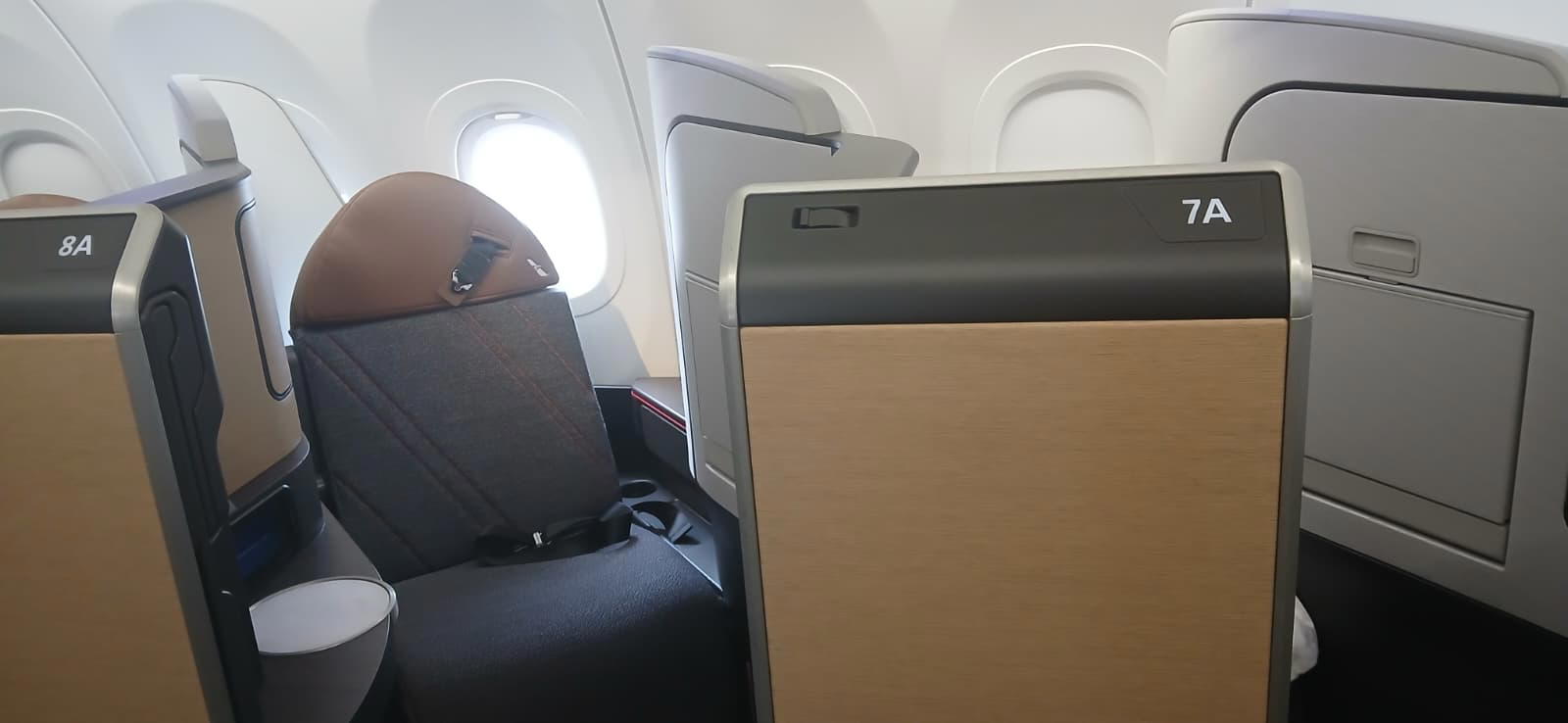
American Airlines’ A321XLR: A First Impression
A firsthand trip report flying American's new A321XLR Flagship Suite from JFK to LAX, plus connecting flights,...
 ⚡ SkyFree Athletics
Why Runners Can’t Stop Buying Marathon Merch—Even When They Hate the Design
Our race apparel isn’t always pretty, but the work behind it makes it impossible to avoid buying it....