T. Geronimo Johnson on Atlanta, White Supremacy, and The Occidental Book of the Dead
Story summary
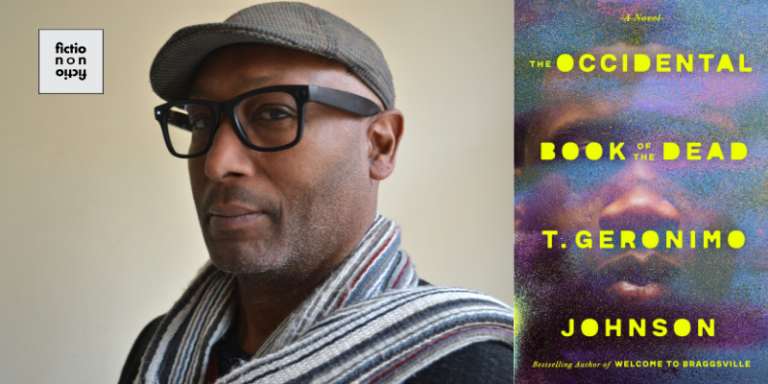
Award-winning fiction writer T. Geronimo Johnson joins co-hosts V.V. Ganeshananthan and Whitney Terrell to talk about his new novel, The Occidental Book of the Dead. He discusses how the book addresses white supremacy and the United States’ deep-seated and racist
📌 Key Highlights & Takeaways
- Award-winning fiction writer T.
- Geronimo Johnson joins co-hosts V.V.
- Ganeshananthan and Whitney Terrell to talk about his new novel, The Occidental Book of the Dead.
Award-winning fiction writer T. Geronimo Johnson joins co-hosts V.V. Ganeshananthan and Whitney Terrell to talk about his new novel, The Occidental Book of the Dead. He discusses how the book addresses white supremacy and the United States’ deep-seated and racist mythology through the perspective of George Washington Jonson, a black police officer working in a fictional version of Atlanta. Johnson talks about researching police work but almost entirely avoiding depicting scenes of it on the page, and also explains why the book transitions from third to first person. He reflects on how structures of The Egyptian Book of the Dead and other classics are incorporated into the story. He reads from The Occidental Book of the Dead .
To hear the full episode, subscribe through iTunes, Google Play, Stitcher, Spotify, or your favorite podcast app (include the forward slashes when searching). You can also listen by streaming from the player below. Check out video versions of our interviews on the Fiction/Non/Fiction Instagram account , the Fiction/Non/Fiction YouTube Channel , and our show website: https://www.fnfpodcast.net/ This podcast is produced by V.V. Ganeshananthan, Whitney Terrell, Archer Walsh, Elizabeth Willis, and Eric Thong.
The Occidental Book of the Dead • Hold It ‘Til It Hurts • Welcome to Braggsville
A Man in Full by Tom Wolfe • The Handmaid’s Tale by Margaret Atwood • Autobiography of an Ex-Colored Man by James Weldon Johnson • The Egyptian Book of the Dead , translated by E.A. Wallis Budge • The Consolation of Philosophy by Boethius • Confessions by St. Augustine
EXCERPT FROM A CONVERSATION WITH T. GERONIMO JOHNSON
V. Ganeshananthan : This novel is broken up into different parts, and the first part is written in the third person, and then there’s this shift to [George Washington] Jonson’s first-person voice, which is prefaced with, among other things, a note about how it should not be read aloud. But there’s all of this text appended to the story that gives it the appearance of a certain other kind of story. For example, there’s episode credits or a fake copyright page, and then this perspective rupture. And I want to ask how you developed this structure and if you always knew that this was where you were headed.
T. Geronimo Johnson: No, I didn’t always know I was headed in this direction. At one point the book was, I think, a thousand pages. It covered 400 years, and we learned along the way that Anthony and George Washington Jonson are in family lines that have the same root, like on a plantation. This version also featured several trials. It was framed around these trials that were interrogating Founding Fathers, religious belief[s], and stuff like this.
There was this other legal framework. It was a long case, and after I escaped that, so to speak, there was a point where, as an important early reader said, it felt like there was too much racism in the book, and I didn’t agree at all. But I understood why they felt that way, and they felt that way as I interpreted it, because there was nothing racist happening in this version of the book, but there was a sense that there was all this atmospheric racism. And so the book was haunted in a way, but it wasn’t processing [racism], so I decided that I needed a first-person narrator to actually process what was happening. That was the only way to hold it together. I actually needed a human consciousness that the reader had direct access to, but a consciousness that also felt as if it had access to the reader, so to speak.
Editorial Text & Content Analyzer
Analyze real-time word count, reading speed, and text density metrics on the fly.
Source: Literary Hub.
Read the full story at the original source ↗
For questions: mrsmithcons@gmail.com.
❓ Frequently Asked Questions (Author Craft Briefing)
What core principle or progressive framework underpins this Author Craft guide?
Whether analyzing biomechanical motor recruitment for bodyweight leverage or structural narrative arcs in fiction, success relies on progressive progressive mastery of foundational fundamentals.
How should practitioners structure their training or reading schedule?
Implement structured 4-to-6 week periodization blocks with scheduled deloads or chapter deconstructions to ensure optimal neuromuscular and cognitive retention.
What common misconceptions should beginners avoid?
Avoid rushing into advanced progressions or skipping thematic world-building; foundational volume builds the tendon resilience and conceptual depth required for mastery.
📖 Full Essay Manuscript & Author Commentary
Complete uncut narrative text, historical footnotes, and reading guides.
⚡ Read Full Manuscript ➔More from SkyFree Chronicles

 💎 LuxeLiving 768
Clase Azul’s New Ultra-Premium Día de Muertos Tequila Was Partially Aged in Champagne Casks
This release marks a new chapter for this luxury tequila series....
 ✈️ SkyFree Club
Hilton Honors best-ever points sale: Get a 120% bonus when you buy points
Hilton Honors launched a limited-time offer to earn 120% bonus points when you buy points. Is this best-ever p...
 ⚡ SkyFree Athletics
Out of Nowhere, Vinny Mauri Became the 4th-Fastest American Marathoner Ever. Could He Do Even Better in Chicago?
The 25-year-old trains alone on Planet Fitness treadmills in Ohio and has turned heads for his mind-boggling w...
 🌿 SkyFree Living
Escape eVista XL Limited: A Fully Upgraded Single-Level Tiny House Ready Now
A brand-new eVista XL Limited from Escape with drywall and maple trim, quartz counters, spray foam insulation,...