What Learning to Paint and Reading The Elements of Style Have in Common
Story summary
I envy painters the freedom to convey thoughts without words. So much so that at one difficult stretch in my life I resolved to give up writing and pick up a paint brush. It wasn’t that I supposed that by
📌 Key Highlights & Takeaways
- I envy painters the freedom to convey thoughts without words.
- So much so that at one difficult stretch in my life I resolved to give up writing and pick up a paint brush.
- It wasn’t that I supposed that by
I envy painters the freedom to convey thoughts without words. So much so that at one difficult stretch in my life I resolved to give up writing and pick up a paint brush.
It wasn’t that I supposed that by learning to paint I might master shape and form and apply it to my work. I simply wanted to lose myself in color. To paint a perfect shade of blue, dive into it, swim a lap or two.
By embracing a completely new art form, I thought I might escape the crises large and small that were making it difficult to write: the emptying nest, the crumbling marriage, the challenges of managing an aging parent. I had set aside the novel I was working on, which in the great scheme of life disruptions is known as a pause, but at that moment walking away from my novel in progress—my fifth if I could see it through—felt cataclysmic.
You are no doubt familiar with the little book, the style guide first written and privately printed in 1918 by William Strunk Jr.
Part of my desire to paint had to do with becoming enamored with an illustration of a baby named Chloë. Chloë is cherubic, with teal blue eyes, carrot-colored hair, and a perfect cherry bow of a mouth. “Chloë smells good, as a baby should,” reads the caption beneath her portrait, meant to illustrate a rule of grammar having to do with usage of the words like and as .
I had stumbled upon Chloë while preparing for the writing class I was teaching at the time. I liked to press on my students The Elements of Style , aka “the little book.”
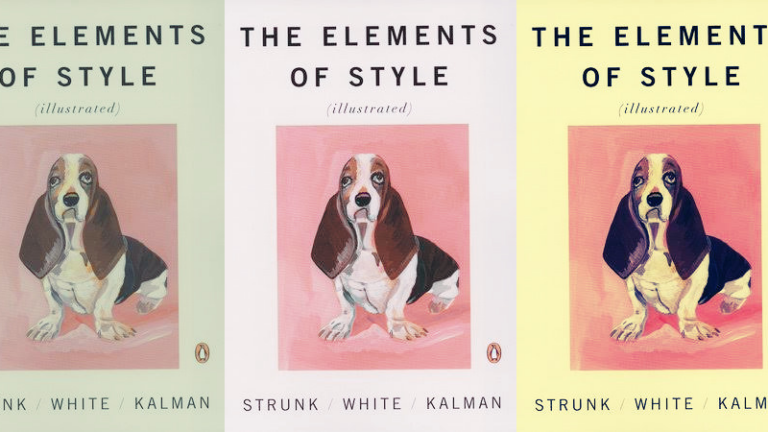
You are no doubt familiar with the little book, the style guide first written and privately printed in 1918 by William Strunk Jr. This book was later updated and expanded by Strunk’s former student, E.B. White, and it has continued to evolve with multiple editions, including the one that contains the depiction of Chloë. The edition I have is illustrated by Maira Kalman, who manages to make painting look as simple as the clean, clear writing Strunk and White espouse.
Use the active voice. Omit needless words. Do not overstate. These are just a few of their admonishments.
Cryptographic Security & Key Generator
Generate entropy-tested high-security keys and encryption-grade tokens.
Source: Literary Hub.
Immerse Yourself in Compelling Investigative Stories, Modern Poetry & Free Classical eBooks
A sanctuary for lovers of the written word: literary essays, long-form journalism, poetry chronicles, author craft breakdowns, and free public domain libraries.
Read Free Stories ➔📖 Full Essay Manuscript & Author Commentary
Complete uncut narrative text, historical footnotes, and reading guides.
⚡ Read Full Manuscript ➔More from SkyFree Chronicles



 ✈️ SkyFree Club
6 Best Credit Cards For Authorized Users: Lounge Access Perks & More
Some cards offer valuable perks not just for the primary cardmember, but for authorized users too, especially ...
Amazing Plastic Bottle Recycling Idea | Easy DIY Home Decor Craft
Transform ordinary plastic bottles into stunning home decor with this quick and easy DIY craft! Instead of thr...
Hydrogen energy car | Supercar WAR! 🏁💥 Who’s the FASTEST? #Supercars
Dive deeper into our world of sounds: MoodI Phonk: MoodI Funk: For the funkiest beats and innovative remixes! ...
 ⚡ SkyFree Athletics
The Mental Strategy That Helps Marathoners Push Through the Final Miles, According to Research
When late-race fatigue builds, shift your focus to keep running strong....