Cambio de marca de Samantha: Reflexiones sobre el primer libro para niñas estadounidenses "adultas"
Story summary
Teníamos varias cosas en la lista de deseos de nuestro 40 aniversario de American Girl: el relanzamiento de Grin Pins; una nueva muñeca histórica con una historia más contemporánea (hemos sugerido constantemente algo del Movimiento Chicano de los años 1960); unos cuantos Smart actualizados
📌 Key Highlights & Takeaways
- Teníamos varias cosas en la lista de deseos de nuestro 40 aniversario de American Girl: el relanzamiento de Grin Pins; una nueva muñeca histórica con una historia más contemporánea (hemos sugerido constantemente algo del Movimiento Chicano de los años 1960); unos cuantos Smart actualizados
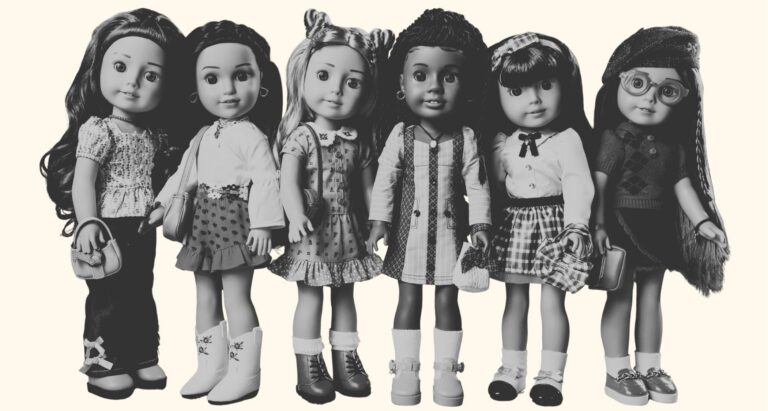
We had several things on our 40th anniversary of American Girl wishlist: The relaunch of Grin Pins; a new historical doll with a more contemporary history (we have consistently suggested something from the 1960s Chicano Movement); a few updated Smart Girl’s guides (please help us with our taxes, American Girl!). What we never imagined—even in our wildest prepubescent or current grown-up dreams—was an American Girl novel for adults. On February 11th, 2026, American Girl announced that they would be releasing their first book aimed explicitly at adults, focusing on Samantha Parkington.
The question of how to engage—and profit from—a grown-up audience is not new in the age of the internet. Time is elastic; nothing truly disappears online, and you can sink yourself into the hazy nostalgia of your childhood at a moment’s notice . During the early days of the COVID-19 pandemic, social media strained under the weight of those returning to their parents’ home and cleaning out the closets of their former bedrooms. Admissions to American Girl’s “doll hospital” surged; at least one of us (Justine) can attest to finding her formative Molly McIntire doll in the back of her old closet with rumpled hair and a loose arm, and promptly utilizing her adult credit card to get her fixed.
In 2025, we published An American Girl Anthology: Finding Ourselves in the Pleasant Company Universe , in part because of the swell of reconnection we witnessed across our social media feeds, but also to satisfy our academic curiosities as scholars with titles and credentials who felt American Girl had played a role in our respective career trajectories. Dr. Tara Strauch, writing for our book, mused over the so-called “Felicity Generation”: women raised on American Girl characters, books, and accessory lines who ultimately became historians (or pursued higher education and academia more broadly). That American Girl has helped foster an interest in the past while shaping futures is both undeniable and laudable.
An “official” update to Samantha’s story doesn’t preclude headcanons. But it does narrow the scope of possibility, just a little.
Over the course of creating the anthology, we worked with a dozen writers covering topics as diverse as Asian-American representation within the brand to adult collectors and the AGIG (American Girl Instagram) community to the proliferation of “tag-yourself” memes about American Girl characters reaching the mainstream. One throughline that touched almost every essay was the question of nostalgia. Nostalgia has two components: the warmth that you feel as you step back, even for the briefest second, into a moment that has passed, but also a necessarily bitter twin–the knowledge that the moment has passed, and you cannot truly return.
Ultimately, American Girl still has to walk a fine line between being a profitable brand and remaining—and enduring as—a safe brand for children who are still learning to navigate the world. So what does American Girl and Pleasant Company owe their fans over the age of twelve?
Samantha is, in our eyes, the logical choice for this somewhat illogical project: she is one of the first three dolls created by Pleasant Rowland; she has commanded a reputation as the doll with the best stuff (evidenced by her rumored status as American Girl’s best-selling doll of all time); American Girl’s 2026 Doll of the Year, Raquel Reyes , is, according to the company, Samantha’s direct descendant. Moreover, though Samantha’s original book series sees her confront the harsh realities of child labor, her storyline has (relative to others) at least somewhat less friction.
American Girl is keeping Samantha: The Next Chapter under strict lock-and-key; at time of writing, no advanced reader copies appear to be circulating, and only the first four chapters are available for review via Cosmopolitan.com (there’s something to be said for American Girl choosing to release this preview via a magazine platform that once attempted to straddle adolescence and maturity with a brand new creation: the Cosmo Girl). Both American Girl and author Fiona Davis (who has penned seven bestselling historical fiction novels involving New York City and its architecture) describe the book this way :
Editorial Text & Content Analyzer
Analyze real-time word count, reading speed, and text density metrics on the fly.
Source: Literary Hub.
Read the full story at the original source ↗
For questions: mrsmithcons@gmail.com.
❓ Frequently Asked Questions (Author Craft Briefing)
What core principle or progressive framework underpins this Author Craft guide?
Whether analyzing biomechanical motor recruitment for bodyweight leverage or structural narrative arcs in fiction, success relies on progressive progressive mastery of foundational fundamentals.
How should practitioners structure their training or reading schedule?
Implement structured 4-to-6 week periodization blocks with scheduled deloads or chapter deconstructions to ensure optimal neuromuscular and cognitive retention.
What common misconceptions should beginners avoid?
Avoid rushing into advanced progressions or skipping thematic world-building; foundational volume builds the tendon resilience and conceptual depth required for mastery.
📖 Full Essay Manuscript & Author Commentary
Complete uncut narrative text, historical footnotes, and reading guides.
⚡ Read Full Manuscript ➔More from SkyFree Chronicles

 💎 LuxeLiving 768
The Fall of Saks: How the American Luxury Icon Unraveled
For much of the past century, Saks Fifth Avenue set the standard for luxury in the United States. Then came th...
 ⚡ SkyFree Athletics
Manual de estrategias de próxima generación: desbloquear oportunidades asimétricas en el entrenamiento a gran altitud
Análisis editorial completo de 2026 que explora el entrenamiento a gran altitud en SkyFree Athletics. Descubra...
Folding Emergency Blanket Outdoor Survival Rescue First Aid Fo... -- Hot Deal 2026 | Limited Offer!
✨ Folding Emergency Blanket Outdoor Survival Rescue First Aid Foil Thermal Blanket Windproof Keep Warm Blanket...
 ✈️ SkyFree Club
Plan esencial: cómo los líderes están gestionando los puntos de las tarjetas de crédito para lograr un rendimiento de alto rendimiento en 2026
Análisis editorial completo de 2026 que explora los puntos de tarjetas de crédito en SkyFree Club. Descubra ma...