Book of Hours
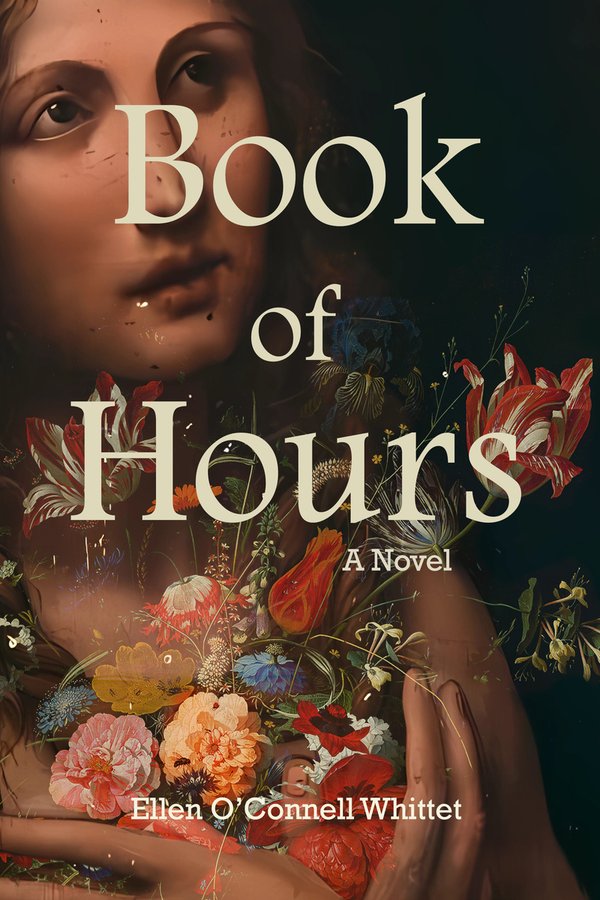
Story summary
The woman first saw the stranded pilgrim, babe in arms, on a poster on the wall of the Medieval Center at the University of Bordeaux the year she finally studied abroad. The black-and-white illustration showed a mother kneeling on the
📌 Key Highlights & Takeaways
- The woman first saw the stranded pilgrim, babe in arms, on a poster on the wall of the Medieval Center at the University of Bordeaux the year she finally studied abroad.
- The black-and-white illustration showed a mother kneeling on the
The woman first saw the stranded pilgrim, babe in arms, on a poster on the wall of the Medieval Center at the University of Bordeaux the year she finally studied abroad. The black-and-white illustration showed a mother kneeling on the frothing waves’ surface, staring into the face of her naked infant as the Virgin Mary towered above them both, attended by angels circling her head. On the shore, the witnesses dropped to their knees in awe. The medieval abbey of Normandy’s Mont Saint-Michel, a tidal island only accessible at certain times each day, stretched from the lapping waves as though reaching for Heaven. Mary’s gown billowed in the wind; in fact, the whole illustration showed the storm, from the water breaking against the monastery to the kneeling pilgrims, bundled for warmth, waiting out the downpour on the shore.
The year she had spent in Bordeaux, the young woman had sat under this poster to eat her lunch between her class on French medieval women, in which they read both the lais of Marie de France and the humiliating letters Heloise wrote to Abelard, and an afternoon class on manuscript studies. She had looked at the poster each day without knowing what, exactly, she was looking at, until one day when they had read a copy of a manuscript called Miracula Beatae Mariae Virginis, or Miracles of the Virgin. This Marian hagiography was compiled by two English monks, Dominic of Evesham and William of Malmesbury, in the first half of the twelfth century.
“Medieval pilgrims walking across the dangerous Norman-Breton coast to Mont Saint-Michel would have seen a large stone cross rising from the sand during low tide, the croix des gr èves, ” Professor Compère told the class.
Because the girl was still learning the language and history of this place she lived, she understood the legend’s foundations, but not its specifics. The legend was known as the Peril: A young pilgrim, returning from her journey to Mont Saint-Michel, was caught by a sudden storm as she crossed the beach back to the mainland. The tides rose, covering her path with water as she frantically raced against rushing sea. She went into labor, and according to this manuscript, the Virgin Mary appeared to save the woman from the rising ocean. “[The Blessed Virgin] stretched out her sleeves above her, in that way [keeping the woman] untouched ( intacta ),” the manuscript read. Her sleeves were like “a bridal chamber” for the woman to lie in, “smelling like the sweet scent of balsam.” The woman christened her baby son “Peril” and earmarked him for the priesthood in gratitude for his miraculous birth.
Professor Compère explained each line to them. “Medieval readers,” he said, “who understood the double meaning of “intacta” as protecting the pilgrim from the sea and as someone who had never had sexual intercourse—someone like the Virgin herself—would have also understood the Virgin’s sleeves as symbolizing a protected womb in which the pilgrim could labor. The Virgin acts as both midwife and priest, sheltering the pregnant pilgrim from the storm and washing away her sins so that she, too, can be delivered.
“It was one of the most famous miracles of the Mont,” Professor Compère said. “But it was a theft.” The theft was committed by the English, he maintained, two monks who rewrote the legend of the Roman du Mont-Saint-Michel into the text they were now reading. They had stolen Saint Michael’s miracle and attributed it to the Virgin Mary.
The postscript to this legend read, “Although it is reported that Saint Michael the archangel protected a certain female pilgrim from danger in the midst of the waves of the sea, it is the Mistress of the World [in other words, the Virgin] who saved this woman from impending death in the waves.” As close to an admission as these English monks could make that they knew the original story before they wrote their own version. Why, the class discussed, did the monks rewrite a miracle originally attributed to Saint Michael and give credit to the Virgin? Or had they believed it was Mary all along, but Saint Michael stole the miracle from her in the first retelling? The young woman sat quietly, writing down what she could understand, struck that medieval audiences would call this a miracle while modern audiences would call it a legend.
Later that day, the young woman went to the university’s bookstore and bought a copy of Le Roman du Mont-Saint-Michel . It was in their robust medieval literature collection, probably assigned in some classes, but she was only really looking for the Peril, to find out how the story changed when it was a male saint who saved the laboring woman rather than the version with Mary they had read in class. Some of the plot points had changed—the pilgrim’s less-devout husband, for example, was a more robust character. The circumstances of Saint Michael’s help while the pilgrim labored and delivered in the ocean were markedly different from those in the miracle ascribed to the Virgin.
Editorial Text & Content Analyzer
Analyze real-time word count, reading speed, and text density metrics on the fly.
Source: Literary Hub.
Read the full story at the original source ↗
For questions: mrsmithcons@gmail.com.
❓ Frequently Asked Questions (Creative Nonfiction Briefing)
What core principle or progressive framework underpins this Creative Nonfiction guide?
Whether analyzing biomechanical motor recruitment for bodyweight leverage or structural narrative arcs in fiction, success relies on progressive progressive mastery of foundational fundamentals.
How should practitioners structure their training or reading schedule?
Implement structured 4-to-6 week periodization blocks with scheduled deloads or chapter deconstructions to ensure optimal neuromuscular and cognitive retention.
What common misconceptions should beginners avoid?
Avoid rushing into advanced progressions or skipping thematic world-building; foundational volume builds the tendon resilience and conceptual depth required for mastery.
📖 Full Essay Manuscript & Author Commentary
Complete uncut narrative text, historical footnotes, and reading guides.
⚡ Read Full Manuscript ➔More from SkyFree Chronicles

 ✈️ SkyFree Club
Fun, sun and killer views: How to spend 72 hours in Palm Springs
A quick Palm Springs vacation: Here’s how to get there using points and miles, the best hotels to book with po...
Denied Boarding, I Took Back My Yacht #englishsubtitle #fullfilm #shortdrama💥💥 | Whispered Alliance | Full Short Drama | English Sub 2026
Denied Boarding, I Took Back My Yacht 💥💥 | Whispered Alliance Watch the full short drama with English subtit...
Why Everyone Is Buying Top 5 Non Slip Running Trainers For Adults - Men Shoes Sneakers Breathable Mesh Slip on Running S...
Best Top 5 Non Slip Running Trainers for Adults deals on AliExpress: 1. New Four-Season Versatile Non-Slip Sho...
 🌿 SkyFree Living
Dragon Fairfax 20: A Compact Tiny House with a Full Kitchen, Laundry, and Lofted Bed
Dragon Tiny Homes' Fairfax 20 fits a full kitchen, a washer-dryer combo, a bathroom, and a lofted bed over a c...