Five Essential Books for Understanding North Korea’s Cult of Personality
Story summary
Anyone who reads the news or has logged onto social media is aware of the cult of personality around North Korea’s Kim dynasty. From afar, it’s almost cartoonish, with the bronze statues and the funny haircuts and the penchant for
📌 Key Highlights & Takeaways
- Anyone who reads the news or has logged onto social media is aware of the cult of personality around North Korea’s Kim dynasty.
- From afar, it’s almost cartoonish, with the bronze statues and the funny haircuts and the penchant for
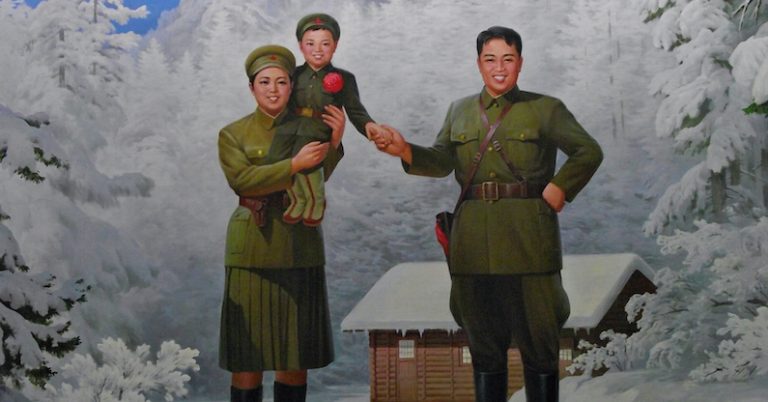
Anyone who reads the news or has logged onto social media is aware of the cult of personality around North Korea’s Kim dynasty. From afar, it’s almost cartoonish, with the bronze statues and the funny haircuts and the penchant for nuclear threats. But examined up close, it’s remarkable—almost breathtaking—in its intensity, in its durability, and, perhaps most strikingly, in its religiosity.
When I first started covering North Korea for The Wall Street Journal more than a decade ago, I was perplexed to learn that Kim Il Sung, the state founder, had been born and raised in a devout Presbyterian family, on the outskirts of a city, Pyongyang, that was so thoroughly Christianized that it was known as the “Jerusalem of the East.” I wondered whether there might have been some connection between Kim’s upbringing in the church and the religiosity of the personality cult that he constructed.
Over the course of twelve years of research and writing, the evidence was, to my mind, unmistakable. Along the way, I realized just how much Kim Il Sung and the broader fate of the North Korean people are woven into the story of modern Korea—in all of its many tragedies, from feudal decay to Japanese colonization to division and civil war. It’s a magnificent story, albeit one full of heartbreak and pain.
Here are five books that were essential to my understanding of the story.
Barbara Demick, Nothing to Envy: Ordinary Lives in North Korea (Random House)
This work of narrative non-fiction is rightly hailed as the best work on North Korea’s devastating famine of the 1990s, which coincided with Kim Il Sung’s death in 1994. Here, Demick tells the story of Kim Il Sung’s 25 million subjects through the personal tales of just a few of them, bringing to life not only the tragedy of North Korea’s most difficult period, but also underscoring the power of the Kim family personality cult even at a moment when it seemed all was lost.
Richard E. Kim, Lost Names: Scenes from a Korean Boyhood (University of California Press)
This collection of thinly veiled autobiographical vignettes from a pioneering Korean American author offers a visceral, ground-level view of what it felt like to live under Japanese colonial rule as a Korean, and what it meant to see Korea liberated—only to then see it divided. Told with tenderness and empathy, this evocative collection of stories from a third-generation Korean Christian writer captures the feelings of nationalism and shame that animated Kim Il Sung.
Editorial Text & Content Analyzer
Analyze real-time word count, reading speed, and text density metrics on the fly.
Source: Literary Hub.
Read the full story at the original source ↗
For questions: mrsmithcons@gmail.com.
❓ Frequently Asked Questions (Creative Nonfiction Briefing)
What core principle or progressive framework underpins this Creative Nonfiction guide?
Whether analyzing biomechanical motor recruitment for bodyweight leverage or structural narrative arcs in fiction, success relies on progressive progressive mastery of foundational fundamentals.
How should practitioners structure their training or reading schedule?
Implement structured 4-to-6 week periodization blocks with scheduled deloads or chapter deconstructions to ensure optimal neuromuscular and cognitive retention.
What common misconceptions should beginners avoid?
Avoid rushing into advanced progressions or skipping thematic world-building; foundational volume builds the tendon resilience and conceptual depth required for mastery.
📖 Full Essay Manuscript & Author Commentary
Complete uncut narrative text, historical footnotes, and reading guides.
⚡ Read Full Manuscript ➔More from SkyFree Chronicles
 🌿 SkyFree Living
The Lived-In Escape Vista Boho We Toured in 2022 Is Now for Sale in North Carolina
The single-level Escape Vista Boho from our 2022 video tour is for sale near Saxapahaw, NC, with wraparound wi...
You Can't Buy A Rolex ⌚
You can't buy a Rolex with cash. Fast. Accurate. Mind-blowing. 📲 Follow our socials & links -...
 ✈️ SkyFree Club
World of Hyatt, Air Canada launch new elite status challenge and double-dipping offers
World of Hyatt and Air Canada Aeroplan are offering new perks, including an elite status challenge and the cha...
Ultimate Guide to the Best Top 5 Unisex Badminton And Running Gear - Li Ning Unisex GP200 Badminton Over Grip 1200*25*0....
Best Top 5 Unisex Badminton and Running Gear deals on AliExpress: 1. Outdoor Trail Running 5L Ultralight Backp...