Music Against the Night
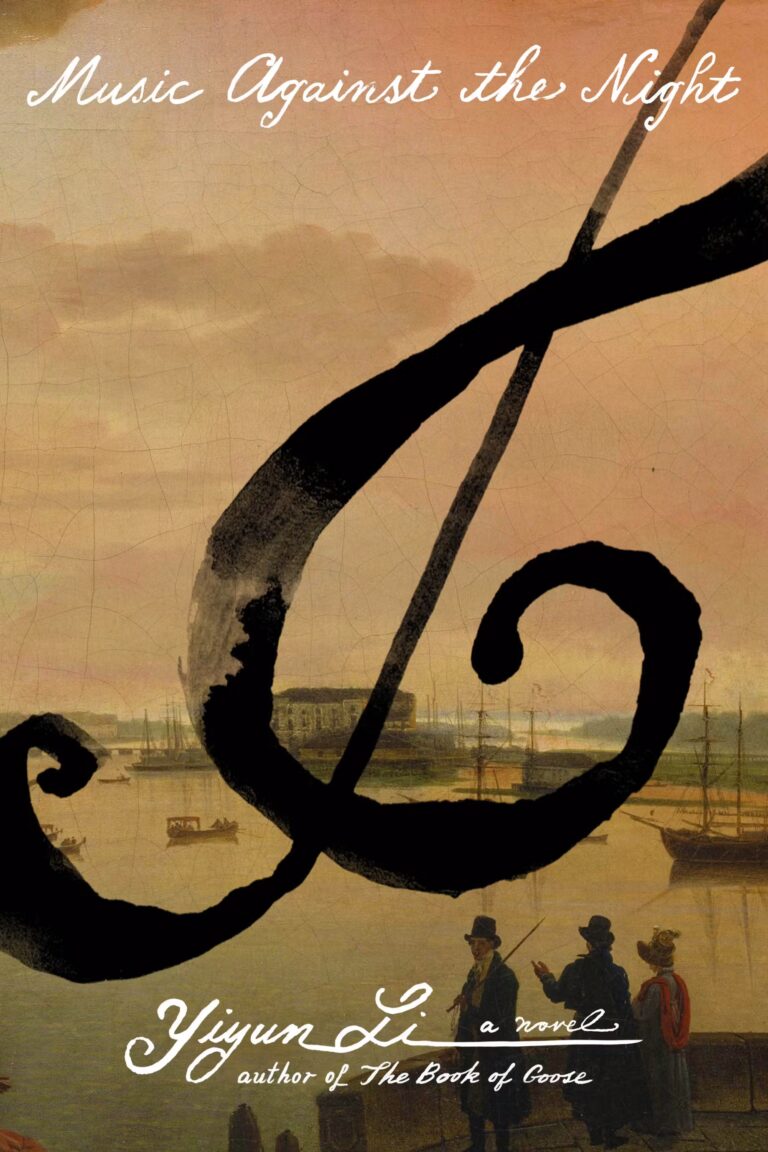
Story summary
Smolensk, Russia, February 1837 and February 1860 Belatedly, John’s last words reached Adelaide. He had been dead for a fortnight, buried for ten days. She was not at his deathbed, having been banished from their marriage bed for decades; nor
📌 Key Highlights & Takeaways
- Smolensk, Russia, February 1837 and February 1860 Belatedly, John’s last words reached Adelaide.
- He had been dead for a fortnight, buried for ten days.
- She was not at his deathbed, having been banished from their marriage bed for decades; nor
Smolensk, Russia, February 1837 and February 1860
B elatedly, John’s last words reached Adelaide. He had been dead for a fortnight, buried for ten days. She was not at his deathbed, having been banished from their marriage bed for decades; nor did she attend the funeral, to which she received no invitation. Another woman had long since taken her place: a usurper’s tears could wet cheeks and soak handkerchiefs equally well.
The news had traveled in a timelier manner. A letter in Adrien’s nearly illegible handwriting arrived in Smolensk the day after John’s death, on the twenty-fourth of January. My dear mother, I regret being the bearer . . . so on and so forth. The wording was ridiculously formal. Adelaide had raised Adrien alone until his defection to Moscow at seventeen, a little over a year ago. A father could be a stranger; still, his fame readily effaced a mother’s care.
There was no mention of a funeral in Adrien’s letter, and for a moment, Adelaide indulged the thought of ordering a carriage for Moscow. How flawlessly she could present herself, decked in her widow’s weeds, at the house on Povarskaya Street, surprising the servants and embarrassing the mistress. How inexorably she could disapprove: the choice of black horses for the carriage, the music played at the funeral, the artist hired to make the death mask, which, already cast, it was too late to alter.
But such an ambush would only provoke gossip. Adelaide had no intention of providing yet more entertainment for irrelevant people. To change her behavior simply because John had died would be a surrender. What did it matter if no one—not even Adrien—recalled that she, Adelaide Field, was still John’s wife by law, and that it was her right to accompany his coffin from the chapel of the Moscow Reformed Church to Vvedenskoye Cemetery? Once called the German Cemetery, it now made room for all the foreigners to congregate in eternity: Germans, Italians, French, Polish, and English, among them Protestants and Catholics as well as godless men like John.
Clotilde Charpentier, who could play music no better than a hen could float and paddle in the Patriarch’s Ponds, would walk behind John’s coffin, with a heavy black veil to shield herself from the January wind and people’s appraising looks.
When John had first taken up Clotilde as a mistress, he had compared her to a pet rabbit, soft and compliant. Clotilde was a woman easy to love, he explained to Adelaide, who listened calmly, as she knew he would expect her to. Love was surely not meant to be an easy undertaking, she said. Not for you, he said, but you’re different. Most people don’t want to wage war in the realm of love. Most people, Adelaide thought of reminding him, don’t want war of any kind, but find me a single person whose life has not been marked by wars, one after another.
That conversation had taken place years ago. Napoleon Bonaparte, having already lost half a million soldiers in Russia, was still an emperor dreaming of new conquests. John and Adelaide were both young enough to believe in their own dreams: he wanted a woman to idolize him; she aspired to be a virtuoso in her own right, an equal to him.
Cryptographic Security & Key Generator
Generate entropy-tested high-security keys and encryption-grade tokens.
Source: Literary Hub.
Read the full story at the original source ↗
For questions: mrsmithcons@gmail.com.
❓ Frequently Asked Questions (Creative Nonfiction Briefing)
What core principle or progressive framework underpins this Creative Nonfiction guide?
Whether analyzing biomechanical motor recruitment for bodyweight leverage or structural narrative arcs in fiction, success relies on progressive progressive mastery of foundational fundamentals.
How should practitioners structure their training or reading schedule?
Implement structured 4-to-6 week periodization blocks with scheduled deloads or chapter deconstructions to ensure optimal neuromuscular and cognitive retention.
What common misconceptions should beginners avoid?
Avoid rushing into advanced progressions or skipping thematic world-building; foundational volume builds the tendon resilience and conceptual depth required for mastery.
📖 Full Essay Manuscript & Author Commentary
Complete uncut narrative text, historical footnotes, and reading guides.
⚡ Read Full Manuscript ➔More from SkyFree Chronicles


 ✈️ SkyFree Club
How to earn and use IHG One Rewards free night certificates
Learn how to earn and redeem IHG free night certificates, top them off with points and get the most value from...
Ferrari 812 Competizione, F430 Scuderia and 296 GTB Review
Some of the best Ferrari reviews of 2023 come together in one high-revving showcase of the 812 Competizione, F...
 ⚡ SkyFree Athletics
Forget Aid Stations: This Denver 50K Fuels Runners Exclusively on Chalupas and Diablo Sauce
What started as a joke between friends has grown into a test of mental grit and GI fortitude....
 🌿 SkyFree Living
Tiny Life Eagle: A 690 Sq Ft Two-Bedroom, Two-Bath Home at Peaceful Meadows
Tiny Life's Eagle is a 690 sq ft home built by Cavco with two bedrooms, two full bathrooms, a farmhouse kitche...