Como um bibliotecário do exército trouxe a alegria da leitura para a linha de frente
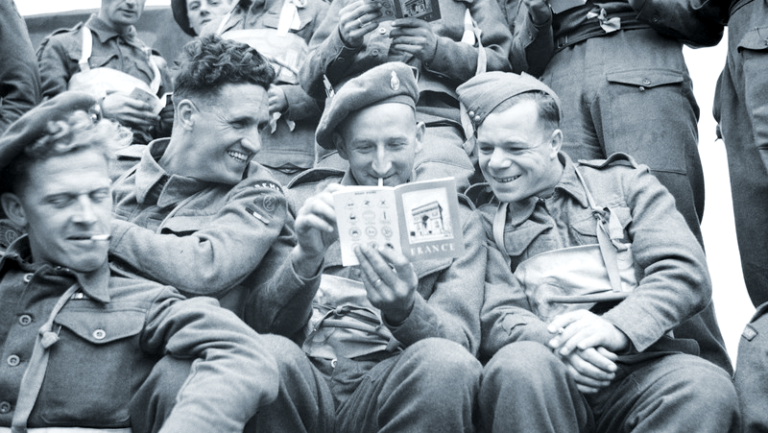
Story summary
Em setembro de 1942, o bibliotecário-chefe do Exército, Ray Trautman, estava na etapa final de uma turnê mundial pelas instalações dos EUA quando chegou à Austrália. Aqui, sua missão era dupla: tirar a temperatura das necessidades de leitura neste cantinho
📌 Key Highlights & Takeaways
- Em setembro de 1942, o bibliotecário-chefe do Exército, Ray Trautman, estava na etapa final de uma turnê mundial pelas instalações dos EUA quando chegou à Austrália.
- Aqui, sua missão era dupla: tirar a temperatura das necessidades de leitura neste cantinho
In September 1942, Army Chief Librarian Ray Trautman was on the final leg of a world tour of US installations when he arrived in Australia. Here, his mission was twofold: take the temperature of the reading needs in this corner of the war, and meet with General Douglas MacArthur, the supreme commander of the Southwest Pacific Theater.
The Pacific had already seen several battles—from Wake Island and Midway, to the Philippines and the ongoing campaign for Guadalcanal. There was little doubt that the Pacific theater would see many more. The gradual advance toward the Japanese mainland would involve amphibious landings of “one damned island after another,” as one GI described it. Some islands had exactly one possible landing point, which the Japanese had spent years preparing to defend. For the invaders, it was like running into a firing squad, surrounded by blood-stained sand, burning landing craft, and cries for medics. As E.B. Sledge, a Marine, described it, “To witness such a scene was worse than personal danger. It was absolute agony.” It is no wonder that from the beginning of the war, the morale situation in the Southwest Pacific Area was, as one biographer of Douglas MacArthur put it, “bleak.”
Trautman felt that if books were needed anywhere, it was in the Pacific theater. To give troops what they wanted and needed most, Trautman endeavored to understand what these soldiers most wanted to read. Officers tended to circulate only among other officers, but Trautman was determined to spend as much time as he could with the men he was serving—the GIs out in the field. He wanted to go where the enlisted men were baking in the heat, getting soaked in the rain, and eating their rations with a heavy peppering of sand no matter how hard they tried to keep the grit out. These were the men who needed a morale boost.
To give troops what they wanted and needed most, Trautman endeavored to understand what these soldiers most wanted to read.
When word spread that the Chief Librarian of the Army was paying a visit, soldiers rushed to request their favorite periodicals and book genres. “I was treated like royalty,” Trautman remembered after the war. He was humbled by their hunger for print of any kind. Most said they would be grateful for anything to read, but, if they had a choice, best-selling novels, home-town newspapers, pin-up magazines, Westerns, sports stories, comics, and even Sears Roebuck catalogs (Trautman referred to these as “wishing books”) topped their list. As one soldier stated in an article printed in The Library Journal , “You would have to [experience] the lethargy and isolation of the Southwest Pacific to realize the value of a book.” Because there were often long periods of waiting, it was handy to have reading material that was small enough to tuck into a pocket. Trautman observed that softcovers were extremely popular because of their compact size. Unfortunately, this format was disfavored by mainstream publishers.
At the time, the paperback was in its infancy. In 1939, the first American paperback firms had been launched: Pocket Books and Ian Ballantine’s New York outpost for Penguin Books, a paperback firm initially founded in 1935 in England. Publishing powerhouses—like Random House, Simon & Schuster, Scribner’s, and Doubleday—avoided anything in paper covers, finding them lurid, cheap, and reputationally harmful. Plus, at a quarter, (as compared to $2 to $4 for hardcovers), the profit margin was a slim one; to make money, the print run typically had to exceed 100,000 or 150,000 copies and sales had to be robust. Between aesthetic objections and concern for their bottom line, traditional publishing houses refused to have their titles printed in anything other than hardcovers. Pocket Books and Penguin Books therefore specialized in classics that were in the public domain and in reprinting commercial and genre fiction, primarily mysteries, science fiction, and Westerns. Contemporary titles and best-sellers were not to be found in soft covers. For GIs, none of the publishers’ qualms bothered them. The size suited their peripatetic reality, the genres were among their favorites, and they treasured every lightweight paperback that made the long journey to their theater. If only there were more books and a greater variety of titles.
Not only did overseas troops view the format of books differently than those on the homefront, but they looked at the act of reading in an entirely different light. As Trautman observed, many troops were stationed in remote outposts where the only attractions were those provided by the military. Primitive living conditions were the norm. Many troops felt stranded on desert islands—because they were. Under these circumstances, even men who had never cracked a book’s spine at home were willing to “read for lack of anything else to do,” as one GI told Trautman. One encounter made a deep impression on him. Some of the books that the men had carried onto transports were still circulating, and he approached a young soldier to see what he was reading. The book was Plato’s Republic “done in basic English.” When the soldier learned Trautman was a librarian, he exclaimed, “Say this guy Plato is good! What else did he write lately?” Whether it was Plato or Tarzan, the men read and swapped books tirelessly, always handling them as delicately as ancient artifacts, for there was no knowing if more would arrive.
Trautman wanted to inundate the Pacific with the reading materials troops wanted, but there were obstacles. One of the biggest was the lack of a system for the storage of any supplies in the Southwest Pacific. This resulted in the destruction of brand-new weaponry and gear, and a crushing cycle of equipment shortages. During Trautman’s visit in the fall of 1942, when matériel was unloaded off the coast of Australia, it was stacked on the beaches, fully exposed to the elements. Humidity and saltwater corroded the bottom tiers of containers as they sank into the wet sand and rotted. A high percentage of every shipload of supplies faced casualties without even being unpacked. The urgent cries for more matériel carried on: more ships of equipment would arrive, a decent portion of the replenishments would succumb to nature, and the wasteful sequence would begin again.
Editorial Text & Content Analyzer
Analyze real-time word count, reading speed, and text density metrics on the fly.
Source: Literary Hub.
Read the full story at the original source ↗
For questions: mrsmithcons@gmail.com.
❓ Frequently Asked Questions (Creative Nonfiction Briefing)
What core principle or progressive framework underpins this Creative Nonfiction guide?
Whether analyzing biomechanical motor recruitment for bodyweight leverage or structural narrative arcs in fiction, success relies on progressive progressive mastery of foundational fundamentals.
How should practitioners structure their training or reading schedule?
Implement structured 4-to-6 week periodization blocks with scheduled deloads or chapter deconstructions to ensure optimal neuromuscular and cognitive retention.
What common misconceptions should beginners avoid?
Avoid rushing into advanced progressions or skipping thematic world-building; foundational volume builds the tendon resilience and conceptual depth required for mastery.
📖 Full Essay Manuscript & Author Commentary
Complete uncut narrative text, historical footnotes, and reading guides.
⚡ Read Full Manuscript ➔More from SkyFree Chronicles

 ✈️ SkyFree Club
Alaska Airlines & Breeze Airways Launch Unusual Partnership… But Why?
Alaska Airlines has quietly started selling Breeze Airways tickets and awarding Atmos Rewards points — an unus...
“This isn’t just a Bugatti… it’s pure automotive insanity!” 🏎️🔥
The Bugatti Veyron 16.4 Grand Sport Vitesse combines breathtaking speed, luxury, and legendary engineering in ...
 ⚡ SkyFree Athletics
Os melhores relógios de corrida Garmin para todos os corredores
A linha de smartwatches da Garmin inclui todos os recursos de que você precisa para entrar em forma e andar ma...
 🌿 SkyFree Living
Cabana Safari do El Capitan Canyon: uma cabana de dois quartos no topo de uma colina com vista para o mar e chuveiro ao ar livre
A Safari Cabin Suite do El Capitan Canyon é uma cabana de dois quartos no topo de uma colina na costa de Santa...