Расплата с самой цивилизацией: как геноцид в Газе изменил Ближний Восток
Story summary
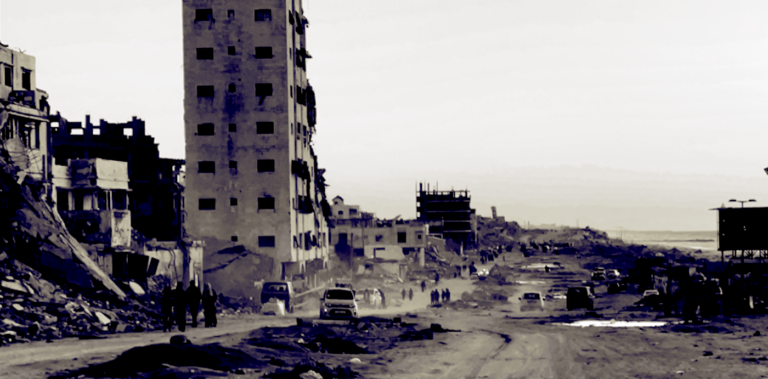
В прошлом я освещал множество войн, но ничто – абсолютно ничто – не подготовило меня к жестокости, жестокости и явной дикости израильской войны в секторе Газа. Я был не один. Коллеги-ветераны «Аль-Джазиры» — закаленные в боях репортеры, прошедшие через руины
📌 Key Highlights & Takeaways
- В прошлом я освещал множество войн, но ничто – абсолютно ничто – не подготовило меня к жестокости, жестокости и явной дикости израильской войны в секторе Газа.
- Коллеги-ветераны «Аль-Джазиры» — закаленные в боях репортеры, прошедшие через руины
I have covered many wars in the past but nothing—absolutely nothing—prepared me for the brutality, cruelty, and the sheer savagery of Israel’s war in Gaza. I wasn’t alone. Veteran colleagues at Al Jazeera—battle-hardened reporters who had walked the ruins of Afghanistan, Iraq, Libya, Yemen, the Balkans, and Ukraine—confessed they had never seen such merciless devastation.
The relentless bombing of the tiny Gaza Strip after Hamas’s devastating attack on the military installations and communities of southern Israel on October 7, 2023, has been compared to the worst wars in memory. In just two months, the Associated Press reported, the Israeli war had “wreaked more destruction than the razing of Syria’s Aleppo between 2012 and 2016, Ukraine’s Mariupol or, proportionally, the Allied bombing of Germany in World War II. It has killed more civilians than the US-led coalition did in its three-year campaign against the Islamic State group.” It has been “the conflict for children in modern times,” as well as the war that has seen an unprecedented targeting of journalists, doctors, humanitarian workers, and United Nations staff. No one was spared. Nothing was sacred. A Brown University report concluded that “more journalists have been killed in Gaza than in the US civil war, both world wars, the Korean war, the Vietnam war, the wars in Yugoslavia and the US war in Afghanistan combined.”
Israeli prime minister Benjamin Netanyahu also saw Israel’s war in a historical perspective. Just a few weeks after the October 7 attack, Netanyahu justified Israel’s obliteration of civilians in Gaza with a comparison to Operation Carthage, a British air raid in World War II that targeted the Nazi intelligence headquarters in Copenhagen but instead hit a school and killed eighty-six children. Netanyahu claimed that the deaths of these children were the tragic consequences of a legitimate act of war, but “not a war crime.” Drawing an equivalence between Nazi Germany, which dominated much of Europe in World War II, and Gaza, the biggest open-air prison in the world that is home to the oldest refugee camp, is not simply an overreach, it is grotesque and absurd.
Israel’s war in Gaza echoed the Nakba of 1948. Once again, communities were driven from their homes; only this time, they did so under drones and satellites.
Israel’s war wasn’t just a historical comparison. Many of us lived the conflict, in real time, twenty-four hours a day, through phone screens we gripped in our trembling hands. There was nowhere to turn, nowhere to hide. It tested our sanity to maintain normalcy amid the carnage. Each day opened a new abyss. Nonstop scenes of panic and chaos, of children crying for parents they would never see again; of parents clutching the mutilated remains of their toddlers; of entire families massacred.
Israel’s war in Gaza echoed the Nakba of 1948. Once again, communities were driven from their homes; only this time, they did so under drones and satellites. Israeli soldiers filmed themselves in high definition laughing, looting homes, destroying entire rows of buildings, humiliating civilians, even killing them. Gone are the days when Israelis saw themselves “shooting and crying,” projecting an image of a people averse to killing. They now broadcast their exploits live, unashamed and proud. To call such televised brutality sick would be to insult the sick. This was something else. This was cruelty made spectacle.
It soon got personal. Our colleagues, friends, and loved ones were gone, blown into pieces by faceless drones, casualties of Israel’s vengeful war. These were not random casualties or collateral damage, but targeted erasures. Faces we knew, people we had laughed with, suddenly vanished. And yet those who survived kept reporting, unintimidated, undeterred, chronicling massacres as they moved between funerals and hospital shifts.
Curious what the perpetrators of this war were thinking, feeling, and saying, I read the Hebrew-language newspapers and watched Israeli television, but the horrific images of civilian casualties in Gaza rarely made it into the media. Instead, Israeli networks broadcast orgies of hate. News anchors, generals, and even celebrities competed to see who could scream the loudest: “Punish them!” “Kill them all!” “Nuke them!” A government minister openly mused about dropping a nuclear bomb on Gaza. A former Knesset member warned, “Every child in Gaza is the enemy.” A pop star demanded: “Erase Gaza completely.” This wasn’t rational debate. It was racist dehumanization. The Israeli media were essentially “drafted to the main goal of winning the war,” as a senior Israeli investigative reporter, Raviv Dror, put it in January 2024. The country that prided itself on being an oasis of democracy in the Middle East had replaced freedom of expression with the unfettered right to incite vengeance.
Editorial Text & Content Analyzer
Analyze real-time word count, reading speed, and text density metrics on the fly.
Source: Literary Hub.
Read the full story at the original source ↗
For questions: mrsmithcons@gmail.com.
❓ Frequently Asked Questions (Creative Nonfiction Briefing)
What core principle or progressive framework underpins this Creative Nonfiction guide?
Whether analyzing biomechanical motor recruitment for bodyweight leverage or structural narrative arcs in fiction, success relies on progressive progressive mastery of foundational fundamentals.
How should practitioners structure their training or reading schedule?
Implement structured 4-to-6 week periodization blocks with scheduled deloads or chapter deconstructions to ensure optimal neuromuscular and cognitive retention.
What common misconceptions should beginners avoid?
Avoid rushing into advanced progressions or skipping thematic world-building; foundational volume builds the tendon resilience and conceptual depth required for mastery.
📖 Full Essay Manuscript & Author Commentary
Complete uncut narrative text, historical footnotes, and reading guides.
⚡ Read Full Manuscript ➔More from SkyFree Chronicles

 💎 LuxeLiving 768
4 Ultra-Rare F.P. Journe Watches Are Heading to Auction Next Month
Yes, it's going to be a blockbuster...and there's a very special Daytona consigned by Jerry Seinfeld, too....
 🏆 2026 World Cup Central
Сможет ли чемпионат мира по футболу 2034 года в Саудовской Аравии пережить эскалацию войн на Ближнем Востоке?
Срочное освещение, о котором сообщает South China Morning Post: сможет ли чемпионат мира по футболу в Саудовск...
 ✈️ SkyFree Club
Marriott Bonvoy Lounge: новая концепция, приходящая в Азиатско-Тихоокеанский регион, предлагающая «Bonvoy Bites»
Marriott Bonvoy тестирует новую концепцию залов ожидания в отелях Азиатско-Тихоокеанского региона, но неясно, ...
Power of Calisthenics Part 1🥶☠️ #calisthenics #motivation #bodyweight #reaction #sigma #ego
Welcome to the world of Calisthenics 💪 credits - This video shows the real power of bodyweight training — str...