Пять основных книг для понимания венецианского гетто и еврейской истории
Story summary
Венецианское гетто играет исключительно важную роль в истории сегрегации. К моменту его основания, 29 марта 1516 года, евреи уже были вынуждены жить в отдельных районах Европы; но что заставило
📌 Key Highlights & Takeaways
- Венецианское гетто играет исключительно важную роль в истории сегрегации.
- К моменту его основания, 29 марта 1516 года, евреи уже были вынуждены жить в отдельных районах Европы; но что заставило
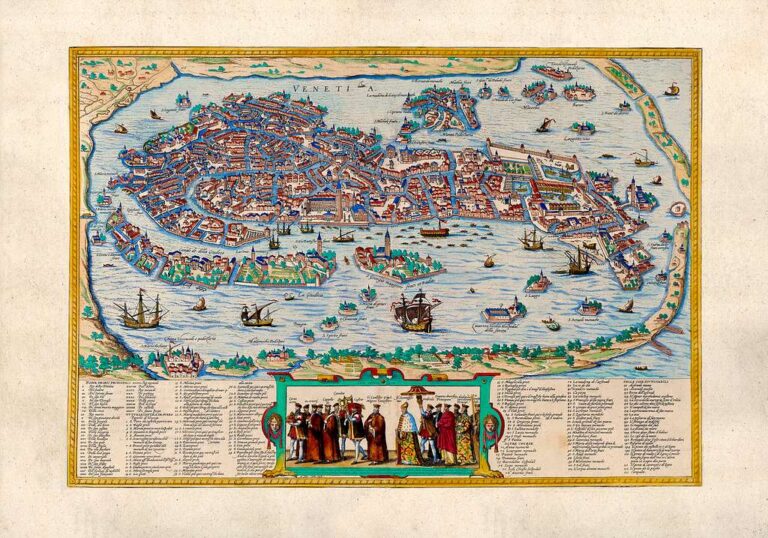
The Venetian Ghetto plays a uniquely important role in the history of segregation. By the time it was founded, on 29 March 1516, Jews had already been forced to live in distinct areas elsewhere in Europe; but what made the Venetian Ghetto so unusual was that it established a completely new way of thinking—and talking—about Jewish confinement. Previously, Jewish areas had gone by all sorts of different names ( Judenstraße , Juiverie etc). These names tended to relate to a specific location (such as a street or square) or were extremely vague. This meant they couldn’t easily be applied to other Jewish areas elsewhere.
The word ‘ghetto’ was different. It had nothing to do with Jews at all. Originally, it came from the verb gettare , meaning ‘to throw’, or ‘to cast’; and was used as the name of an island in Cannaregio, because that was where the communal copper foundry had thrown its rubbish. When the Venetian government confined the city’s Jews there in the early sixteenth century, the island—now covered in tenement buildings—kept the name; and soon enough, ‘ghetto’ was used to describe not just the place, but the institution of Jewish confinement itself. This proved crucial. Since the word wasn’t linked to a street, or a square, or anything like that, but still conjured up a sense of total isolation—by virtue of the ghetto’s location—it came to connote a very particular type of confinement. As such, it could be easily exported to describe Jewish quarters elsewhere—and eventually adapted to describe sites of confinement or exclusion the world over.
When we think of the Venetian Ghetto, however, one of the first things most of us think of is probably Shylock from Shakespeare’s The Merchant of Venice . Unfortunately, Shakespeare never actually visited Venice; and scholars now recognise that Shylock’s character is more a reflection of anti-Jewish hysteria in early seventeenth-century London than anything that was going on in Italy at that time. But it is still a useful image for two reasons. On the one hand, Shylock’s mistreatment in the play isn’t a million miles away from how Jews in Venice were treated.
From the beginning, they were subject to strict and often humiliating restrictions–and were frequently the target of violence and discrimination. On the other hand, the fact that Shakespeare chose to make Shylock a resident of Venice is a telling illustration of the Ghetto’s profoundly international character. It was a microcosm of the Jewish world. Eventually consisting of three distinct, but connected, ghettos, it was home to Jewish migrants and refugees from Germany, Spain, Portugal, the Ottoman Empire, modern Ukraine and Russia—and beyond. It retained links with Jewish communities as far afield as Amsterdam and Alexandria; and it came to influence the way Jews were perceived—and thought about themselves—far and wide.
In my book, The First Ghetto: Venice and the Jews , I tried to bring both of these elements to the fore. I wanted to write a truly social history of the place. Using a wealth of contemporary testimonies, I show how the Jews of Venice not merely survived centuries of hardship and oppression, but thrived. I explore the explosion of Hebrew printing, and the proliferation of poetry, music, and thought; and I also try reconstruct the lives of the ordinary people in as much detail as I can—bringing to life the sights, sounds, and smells of their everyday existence.
But I also realized that the Ghetto’s story could only truly be understood by setting it in a much wider context. I wanted to show how its existence has been shaped by Venice’s own shifting fortunes: how, having been first called into existence by migration and war, its endurance was guaranteed by Venice’s decline; and its legacy twisted by Napoleon’s Italian campaigns, Austrian rule, Italian unification, and the tragedies of the Second World War.
The books I have chosen are intended to reflect these two key facets of the Ghetto’s character. In my own research, I have relied heavily on the wealth of Italian scholarship which has been produced in recent years (such as the indispensable studies by Donatella Calabi, Riccardo Calimani, Ennio Concina, Ugo Fortis, and Renata Segre—to name just a few), but there are some really splendid works in English give a great insight into both the Ghetto’s inner workings and its broader setting. I’ve also picked one novel in French that is really very much worth reading.
John Julius Norwich, A History of Venice (Vintage)
Editorial Text & Content Analyzer
Analyze real-time word count, reading speed, and text density metrics on the fly.
Source: Literary Hub.
Read the full story at the original source ↗
For questions: mrsmithcons@gmail.com.
❓ Frequently Asked Questions (Creative Nonfiction Briefing)
What core principle or progressive framework underpins this Creative Nonfiction guide?
Whether analyzing biomechanical motor recruitment for bodyweight leverage or structural narrative arcs in fiction, success relies on progressive progressive mastery of foundational fundamentals.
How should practitioners structure their training or reading schedule?
Implement structured 4-to-6 week periodization blocks with scheduled deloads or chapter deconstructions to ensure optimal neuromuscular and cognitive retention.
What common misconceptions should beginners avoid?
Avoid rushing into advanced progressions or skipping thematic world-building; foundational volume builds the tendon resilience and conceptual depth required for mastery.
📖 Full Essay Manuscript & Author Commentary
Complete uncut narrative text, historical footnotes, and reading guides.
⚡ Read Full Manuscript ➔More from SkyFree Chronicles

 💎 LuxeLiving 768
Этот таунхаус на Манхэттене стоимостью 80 миллионов долларов когда-то был частным гаражом Пола и Банни Меллон
Бывший генеральный директор Morgan Stanley Джон Мак и его жена Кристи Мак превратили бывший каретный сарай в в...
 ✈️ SkyFree Club
Награды IHG One Rewards Milestone: как получить повышение класса люкс и доступ в зал ожидания
Программа IHG One Rewards Milestone Rewards позволяет вам выбирать такие привилегии, как подтвержденное повыше...
Don't Buy Top 5 Seamless Halter Gym Tops For Support Before Watching This! - Halter Yoga Vest, Shockproof Running Sports...
Best Top 5 Seamless Halter Gym Tops for Support deals on AliExpress: 1. Sexy Halter Neck Beautiful Back High W...
 🌿 SkyFree Living
Крошечный дом Ники и Джуди в Кейп-Бретоне с лифтом для собак выставлен на продажу
Крошечный дом Howling Dog Construction, который мы представили в 2017 году, с лестницей для хранения, гостевым...