Как активистка-феминистка Робин Морган помогла сохранить наследие Сильвии Плат
Story summary
В субботу утром, в выходные, посвященные Дню труда, моя лучшая подруга Дэни, тоже писательница, написала мне, чтобы сообщить, что умерла Робин Морган, выдающаяся американская активистка-феминистка, организатор и писательница. В разгар спешки к финишу
📌 Key Highlights & Takeaways
- В субботу утром, в выходные, посвященные Дню труда, моя лучшая подруга Дэни, тоже писательница, написала мне, чтобы сообщить, что умерла Робин Морган, выдающаяся американская активистка-феминистка, организатор и писательница.
- В разгар спешки к финишу
On the Saturday morning of Labor Day weekend, my best friend Dani, also a writer, wrote to tell me that Robin Morgan, the landmark American feminist activist, organizer, and writer, had died. In the midst of the rush to finish my syllabi and opening week assignments, as my husband shuffled the kids into their sneakers and Crocs and the car for one last back-to-school outing, everything stopped. I stood at the kitchen sink watching the light filter through the holly bush at the window and cried.
Born January 29, 1941, Robin’s list of accomplishments, which included 23 books, organizing the famed protest of the 1969 Miss America Pageant (when feminists crowned and sashed a sheep on the nearby Atlantic City Boardwalk), and the founding of the National Network of Rape Crisis Centers, is extraordinary, and outlined in the outpouring of obituaries in newspapers here and abroad . But only a handful of these tributes mention Robin’s profound influence on Sylvia Plath’s legacy, one which in turn dramatically affected Robin’s life and career. If they do, this legacy is reduced to the mention of Robin’s poem “Arraignment,” which began with the lines
How can I accuse Ted Hughes of… the murder of Sylvia Plath?
In fact, just trying to quote the opening lines of “Arraignment” points immediately to the ways Robin’s relationship with Plath’s work will not be reduced. Robin included “Arraignment” in her 1972 poetry collection Monster, but the published “Arraignment” wasn’t the version she wanted in print. Robin’s original version of “Arraignment” began “I accuse / Ted Hughes / of… the murder of Sylvia Plath.” As she detailed in a 1973 essay written for Feminist Art Journal, prior to Monster’s publication, but after galleys had already been printed, Robin was called into a meeting with Random House lawyers, who informed her that “Arraignment” had to be pulled or rewritten. The poem as it stood, she was told, accused Ted Hughes of raping and murdering his wife, and was grounds for libel.
Robin’s response to these men was two-pronged: first, she had not accused Ted Hughes of the literal murder of his first wife, who she agreed had certainly died by suicide on February 11, 1963. Robin was instead arguing that through his extreme (and well-documented) censorship of Sylvia’s work after her suicide, Hughes had killed Plath’s artistic corpus and her radical politics. “Arraignment” used the word “murder” satirically, as part of a long artistic tradition: Marvel, Swift, Donne. Second, in her time researching Sylvia Plath, Robin had seen a series of letters Plath wrote that described abuse, including sexual abuse, by Hughes—about twenty letters, she wrote in Feminist Art Journal— so her accusation of rape in “Arraignment” was based on, and back up by, Plath’s own words. Robin quoted one of these letters: Why must the killing of me be so elaborate? “A purely Plathian line,” she wrote.
The poem as it stood, she was told, accused Ted Hughes of raping and murdering his wife, and was grounds for libel.
Robin’s concise and insightful argument meant nothing to Random House’s lawyers who, like many literary legal teams of the time, were likely aware of Ted Hughes’s propensity for lawfare to shut down anyone trying to challenge his version of Plath’s life and work. So, Robin rewrote “Arraignment,” changing “I accuse / Ted Hughes” to “How can I / accuse / Ted Hughes,” a brilliant rhetorical move that managed to contain her quagmire in line breaks and punctuation. How can I do this and get away with it? she asks herself on the page—while getting away with it, since the poem in its second form went to print.
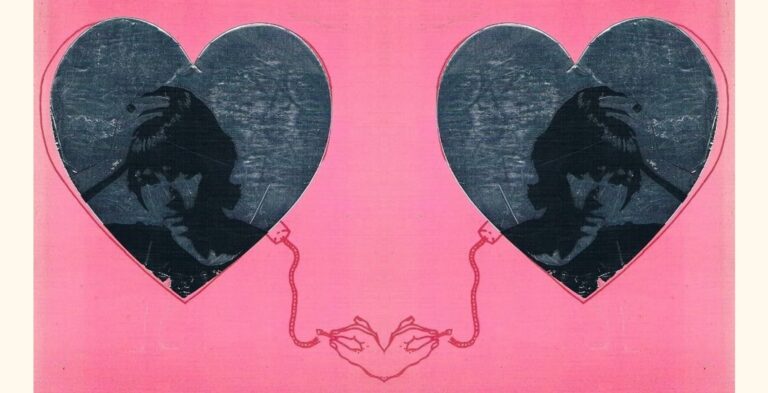
It was vintage Robin, the woman who once derided women’s attempts to organize alongside leftist men as “the dream that being in the leadership collective will get you anything but gonorrhea.” But in many ways, it devastated her. She felt Monster had been ruined, and that her creative and political ethics, which for her were always one and the same, were compromised. She was literally sick over it, writing in Feminist Art Journal that she took to gobbling Dramamine before meetings with the Random House lawyers. But a reprieve was on its way: when the original version of “Arraignment” was printed in Feminist Art Journal, women all over the world reprinted pirated versions of Monster with the first “Arraignment” restored. Their version of Monster was hot pink, with a silver sticker emblazoned with Robin’s face. “Those women,” she said about the pirated Monster , in one of our phone conversations, “all those wonderful women,” her voice breaking, decades later, at the ways they rallied around her.
Editorial Text & Content Analyzer
Analyze real-time word count, reading speed, and text density metrics on the fly.
Source: Literary Hub.
Read the full story at the original source ↗
For questions: mrsmithcons@gmail.com.
❓ Frequently Asked Questions (Author Craft Briefing)
What core principle or progressive framework underpins this Author Craft guide?
Whether analyzing biomechanical motor recruitment for bodyweight leverage or structural narrative arcs in fiction, success relies on progressive progressive mastery of foundational fundamentals.
How should practitioners structure their training or reading schedule?
Implement structured 4-to-6 week periodization blocks with scheduled deloads or chapter deconstructions to ensure optimal neuromuscular and cognitive retention.
What common misconceptions should beginners avoid?
Avoid rushing into advanced progressions or skipping thematic world-building; foundational volume builds the tendon resilience and conceptual depth required for mastery.
📖 Full Essay Manuscript & Author Commentary
Complete uncut narrative text, historical footnotes, and reading guides.
⚡ Read Full Manuscript ➔More from SkyFree Chronicles

24 Hours in the Swamp with My Dog | Survival Shelter, Fire & Bushcraft
I spent a night in the swamp with my dog, relying on basic survival skills and the natural environment to get ...
2027 Lamborghini Revuelto Review V12 Hybrid Supercar, Luxury Interior, Design & Performance
Discover the 2027 Lamborghini Revuelto, a V12 hybrid supercar featuring aggressive Lamborghini styling, Y shap...
 ✈️ SkyFree Club
Основной план: как лидеры используют баллы по кредитным картам для достижения высоких результатов в 2026 году
Комплексный редакционный анализ 2026 года, посвященный баллам по кредитным картам в SkyFree Club. Откройте для...
 ⚡ SkyFree Athletics
Учебное пособие следующего поколения: раскрытие асимметричных возможностей при высотных тренировках
Комплексный редакционный анализ 2026 года, посвященный высотным тренировкам по легкой атлетике SkyFree. Открой...