Fotografiando el cambio radical de los Estados Unidos de los años 60 y 70
Story summary
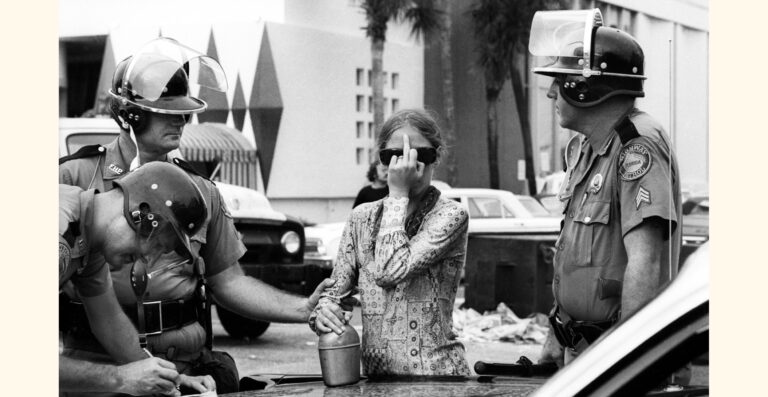
Este proyecto profundamente personal, Rebeldes con causa, es un libro fotográfico que captura la década de 1960, un período formativo de la historia estadounidense cuando grupos de rebeldes iniciaron una serie de cambios y comenzaron una revolución como ninguna otra. El libro es nuestro
📌 Key Highlights & Takeaways
- Este proyecto profundamente personal, Rebeldes con causa, es un libro fotográfico que captura la década de 1960, un período formativo de la historia estadounidense cuando grupos de rebeldes iniciaron una serie de cambios y comenzaron una revolución como ninguna otra.
- El libro es nuestro
This deeply personal project— Rebels with a Cause —is a photographic book that captures the 1960s, a formative period of American history when groups of rebels initiated a series of changes and started a revolution unlike any other. The book is our love letter to the heroes and heroines who changed America and allowed Jean-Pierre and I to document it. It is an ode to those who fought for a better world not just with force or power, but with spirit, music, courage, and imagination.
When we arrived in the United States in 1965, America was in the middle of profound turmoil. The youth of the country, along with some dreamers and fighters, were the ones pushing it forward little by little. We began documenting this change. The streets and campuses were loud with protests, but there was a palpable feeling of hope, enthusiasm, and joy. There was tragedy as well, and we lived through the murderous year of 1968 when Robert Kennedy campaigned to be the next President and Martin Luther King was shot dead in Memphis. On April 22, 1970, we went together to the first Earth Day in New York, when thousands of mostly young people filled the streets to demand protection for the planet. It was striking to see environmental concern emerge as a form of activism, driven by the same generation that was questioning war, politics, and the future itself, reinforcing the idea that protest could be thoughtful, creative, and deeply constructive.
We saw the counterculture emerge as a significant social movement. We saw students march against the Vietnam War, four of whom were shot dead at Kent State University, and to represent their suffering, a young man strapped himself to a crucifix. We saw veterans occupy the Statue of Liberty where the American flag was turned upside down, a poignant symbol of resistance. At Watkins Glen, we saw hundreds of thousands of hippies dancing in the rain, sleeping in fields, making love, and sharing what they had. “Make love, not war” became their slogan. The hippie generation is gone now but has impacted our ways of life in profound ways. At the same time we followed the women’s movement [see photos below] as it grew, fighting for change and struggling for equality, pushing back on the expectations placed on them.
Our first encounter with the LGBTQ+ community came in 1965, when two young trans people asked Jean-Pierre to take their picture. They invited him into their building on West 65th Street and introduced him to their friends. They had an unapologetic lust for life and most touching was when they came together to play with dolls, pretending to be mothers with their babies. Jean-Pierre suggested we go to the roof to have a fashion shoot. They loved the idea and took an additional two hours to dress, groom, and make themselves up. Being gay was still uncharted territory and their trust, at a time when visibility was dangerous, was courageous.
Their courage defined an era, and their legacy continues today.
Jean-Pierre also photographed young Americans searching for spiritual meaning. At Explo ‘72 in Dallas, thousands pointed their fingers toward the sky in a moment of collective belief. Years later, at Rajneeshpuram in Oregon, he observed a community attempting to build a self-contained world based on meditation, work, and devotion. They cultivated an environment of love and friendship, and even surprised Jean-Pierre with the largest birthday cake he had ever received. He actually did succumb to the charm of their cult and was sad to leave the Nirvana they tried to create. The community advocated a spiritual life and represented their idea of an earthly paradise.
We mingled with the Black fans outside of Madison Square Garden for what was called “The Fight of the Century” between Muhammad Ali and Joe Frazier. Jean-Pierre took photos of celebrities arriving in flamboyant velvet suits, matching fur coats, towering hats, and golden platform shoes that screamed confidence and pride. They represented the trailblazing changes of fashion extravaganza. When we revisited Jean-Pierre’s archives many years later, we understood that Ali and Frazier were not the stars of the show—that crowd was.
Jean-Pierre spent time with a gang called the Savage Skulls in the Bronx who were known for violence that made newspaper headlines. They made no effort to integrate into the society that rejected them, yet they welcomed him into their world. Behind the reputation that surrounded them, there was humor, loyalty, and pride. Jean-Pierre felt affection for this struggling youth that found a way to support each other. These experiences showed us that love and faith, in many forms, was another way young people tried to respond to uncertainty and disillusionment.
Editorial Text & Content Analyzer
Analyze real-time word count, reading speed, and text density metrics on the fly.
Source: Literary Hub.
Read the full story at the original source ↗
For questions: mrsmithcons@gmail.com.
❓ Frequently Asked Questions (Creative Nonfiction Briefing)
What core principle or progressive framework underpins this Creative Nonfiction guide?
Whether analyzing biomechanical motor recruitment for bodyweight leverage or structural narrative arcs in fiction, success relies on progressive progressive mastery of foundational fundamentals.
How should practitioners structure their training or reading schedule?
Implement structured 4-to-6 week periodization blocks with scheduled deloads or chapter deconstructions to ensure optimal neuromuscular and cognitive retention.
What common misconceptions should beginners avoid?
Avoid rushing into advanced progressions or skipping thematic world-building; foundational volume builds the tendon resilience and conceptual depth required for mastery.
📖 Full Essay Manuscript & Author Commentary
Complete uncut narrative text, historical footnotes, and reading guides.
⚡ Read Full Manuscript ➔More from SkyFree Chronicles

 ⚡ SkyFree Athletics
Este corredor británico no tenía equipo de apoyo en Chicago. Luego, una publicación en Facebook cambió todo su maratón.
Una súplica de su tío en Facebook se convirtió en carteles, confeti y gente cuidándolo a lo largo de 42 kilóme...
 💎 LuxeLiving 768
Esta casa adosada de 80 millones de dólares en Manhattan alguna vez fue el garaje privado de Paul y Bunny Mellon
El ex director ejecutivo de Morgan Stanley, John Mack, y su esposa Christy Mack transformaron la antigua coche...
 ✈️ SkyFree Club
IHG One Rewards Milestone Rewards: cómo obtener mejoras de suite y acceso a salas VIP
IHG One Rewards Milestone Rewards le permite elegir beneficios como mejoras de suite confirmadas, acceso al cl...
 🌿 SkyFree Living
La pequeña casa de Nicky y Judy en Cape Breton con ascensor para perros ya está a la venta
La pequeña casa de Howling Dog Construction que presentamos en 2017, con sus escaleras de almacenamiento, loft...