Hernan Diaz’s New Novel Isn’t a Dystopia—Trust Him
Story summary
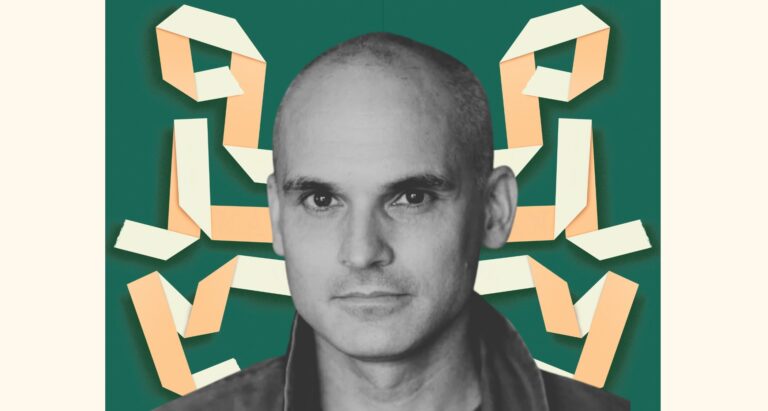
Pulitzer winner Hernan Diaz releases his first novel in four years this week, and he’s parrying a few questions about genre. “I take issue with the word dystopia,” he replies to an opening inquiry. “I don’t think Ply is a
📌 Key Highlights & Takeaways
- Pulitzer winner Hernan Diaz releases his first novel in four years this week, and he’s parrying a few questions about genre.
- “I take issue with the word dystopia,” he replies to an opening inquiry.
- “I don’t think Ply is a
Pulitzer winner Hernan Diaz releases his first novel in four years this week, and he’s parrying a few questions about genre. “I take issue with the word dystopia ,” he replies to an opening inquiry. “I don’t think Ply is a dystopian novel.”
Also: “I think the word post-apocalyptic is absurd and oxymoronic. If there’s an apocalypse, there isn’t a ‘post.’ It’s an eschatological word. It’s the end!”
Furthermore, “You used the word dystopia in your first question, and now you use the word nihilism, which I think is an important word. These terms are married, right?”
These quotes make Diaz sound like a challenging interviewee. Really, he’s not—he’s one of the kindest authors I’ve recently met. But I’m not the only journalist who’ll be asking him about dystopias this month, because Ply , Diaz’s third novel, takes place in an urban future (probably New York City) reclaimed by nature. An aesthetic shambles of nonexistent state capacity where crime is low and punk shows—“more like post-punk,” he specifies—reign supreme.
It’s not a dystopia, presses Diaz. It’s something else. A new way of life. A new way of thinking.
“People in this world have lost a lot of things that are very painful to lose,” says Diaz. “The social safety net provided by the state. Rule of law. Healthcare. Education. Things that we take for granted, almost like air or water. We believe these things are natural, but they’re not. They’re constructs.”
As society goes out the window, other things also disappear, “things that were absolutely worth losing.” These include oppressive power structures, environmental suppression, and, top of mind these days, “the commodification of everyday life.”
The protagonist of Ply is a nameless young “pincher,” someone who steals electricity from the spotty grid and delivers it to clients in battery form. Some of her customers are raucous musical groups; others are criminal elements. After she makes a breakthrough in battery storage technology, the pincher is caught in a power struggle, pun intended, between local kingpins.
Editorial Text & Content Analyzer
Analyze real-time word count, reading speed, and text density metrics on the fly.
Source: Literary Hub.
Read the full story at the original source ↗
For questions: mrsmithcons@gmail.com.
📖 Full Essay Manuscript & Author Commentary
Complete uncut narrative text, historical footnotes, and reading guides.
⚡ Read Full Manuscript ➔More from SkyFree Chronicles
Patek Philippe: The Independence That Changed Luxury Watchmaking
Patek Philippe: The Independence That Changed Luxury Watchmaking Patek Philippe Is Playing a Different Game — ...
 ✈️ SkyFree Club
What is Bilt Cash? How to earn and redeem this reward currency
Learn how Bilt Cash works, how to earn it and the best ways to redeem it for credits, travel perks, points and...
 ⚡ SkyFree Athletics
The 30 Best Gifts for Runners Who Already Have a Favorite Pair of Shoes
Pro tip: Socks are actually a great gift....
 🌿 SkyFree Living
First-Time Guide to Oman: Top Experiences & Planning Tips
Plan your visit to Oman with this guide covering top experiences, travel tips, where to stay and when to visit...