The Radiance
Story summary
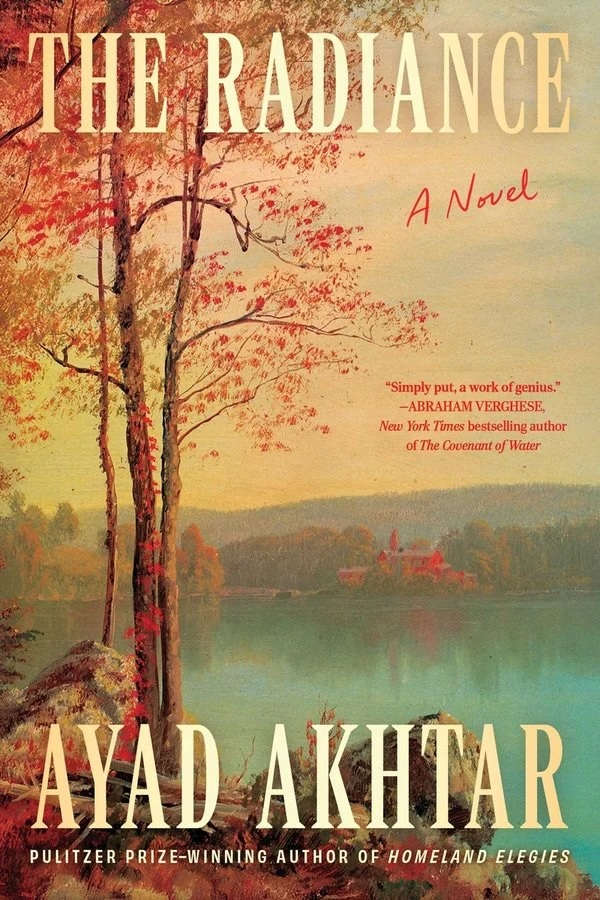
The narrator of The Radiance shares Akhtar’s name and much of his life. After leaving New York for a small Hudson Valley town, he ends up getting hit by a pickup truck during a bike ride. When he awakens from
📌 Key Highlights & Takeaways
- The narrator of The Radiance shares Akhtar’s name and much of his life.
- After leaving New York for a small Hudson Valley town, he ends up getting hit by a pickup truck during a bike ride.
- When he awakens from
The narrator of The Radiance shares Akhtar’s name and much of his life. After leaving New York for a small Hudson Valley town, he ends up getting hit by a pickup truck during a bike ride. When he awakens from the subsequent coma, something is different: things appear lit from within and bathed in silence; and he’s impotent. The luminous state has since deepened after an evening during which his cousin, Tanveer, disclosed a terrible family secret about his father. Lucie Neroponte, the friend who calls him in the passage below, teaches at a local college; an essay about the affair she had with her own professor when she was twenty made her name.
Like Lucie, I had qualms about teaching, though mine had nothing to do with eros. Rather, I worried that the security of a job in the academy might dull me as a writer. By my mid-twenties, I’d begun to see a pattern: an inclination toward fantasy over fact, a tendency to cling to illusion long past the point any evidence could justify. Reality always won—usually after the painful humiliations to which my delusions led. I was too compelled by the comforts of my imagination—which was, of course, why I wanted to be a writer in the first place. But those same attachments, I came to see, kept my work from feeling real.
Early experiences in the theater proved salubrious. Humiliation was a reliable corrective, and I found that the ruthless impersonality of a paying audience made the shame bearable. I learned from jokes that didn’t work and story threads that didn’t track. Mid-show walkouts and anemic applause hurt, yes, but not so much that I couldn’t learn to heed them. My skits and plays got better. I grew as a writer. As my peers took on teaching jobs with health care, pension plans, and just enough to live on, I was tempted to follow. But I worried about what I might lose in finding protection from the forced encounter with audiences. Plying my trade in front of paying crowds without a safety net, I concluded, was the only way forward.
It was a path that would be protracted and painful, and all the “usual words,” to quote James Baldwin, applied to my struggles too: “discipline, love, luck, but most of all, endurance.” I endured—and in my case, it was only by the grace of what I gleaned from audiences that I found my way. The value of crowdsourced wisdom, then, was the only lesson I felt qualified to share when I finally accepted an offer to teach young playwrights at a university in St. Louis.
It was the summer Michael Brown was shot; a few miles north of campus, Ferguson was ablaze. I sublet a place within walking distance of Dred Scott’s grave. Twice a week, I rode the bus to a dim room, barely larger than the table around which my students and I sat reading aloud from their work. I couldn’t get past how managed and opaque our responses were compared to the clarifying disinterest of a paying audience. Without the help of an audience, we all discovered how little I actually knew about what I did. When the workshop ended, my parting remarks were an apology by way of exhortation: My weaknesses as a teacher, I explained, were perhaps best seen as extensions of my strength as a writer: my trust in the public. I urged them to dispense with the class critiques and get their work in front of paying crowds. The paying part was essential. Our art was not a gift but a form of commerce. To know the audience’s truth, I told them, it had to feel owed pleasure for what it had paid. When I left St. Louis at the summer’s end, I didn’t see myself teaching again.
More than a half dozen years later, and just a month after that dark and miraculous evening with my cousin Tanveer, Lucie called to ask if I might be interested in teaching a newly orphaned section of creative writing at the college. I was surprised to hear myself tell her that I was—and embarrassed to admit it.
“Who’d want to teach after listening to you talk about it?” I heard how harsh it sounded. “Sorry—that came out wrong.”
“No, I get it. I complain too much. But it’s the closest thing I’ve ever felt to a calling.” She paused. “A good student, a really good student, that’s still the best part. It happens. Not often, but it does. So don’t take me too seriously.”
Editorial Text & Content Analyzer
Analyze real-time word count, reading speed, and text density metrics on the fly.
Source: Literary Hub.
Read the full story at the original source ↗
For questions: mrsmithcons@gmail.com.
📖 Full Essay Manuscript & Author Commentary
Complete uncut narrative text, historical footnotes, and reading guides.
⚡ Read Full Manuscript ➔More from SkyFree Chronicles
Patek Philippe: The Independence That Changed Luxury Watchmaking
Patek Philippe: The Independence That Changed Luxury Watchmaking Patek Philippe Is Playing a Different Game — ...
 ✈️ SkyFree Club
What is Bilt Cash? How to earn and redeem this reward currency
Learn how Bilt Cash works, how to earn it and the best ways to redeem it for credits, travel perks, points and...
 ⚡ SkyFree Athletics
The 30 Best Gifts for Runners Who Already Have a Favorite Pair of Shoes
Pro tip: Socks are actually a great gift....
 🌿 SkyFree Living
First-Time Guide to Oman: Top Experiences & Planning Tips
Plan your visit to Oman with this guide covering top experiences, travel tips, where to stay and when to visit...