Как Э.Л. Шэнь пришла к пониманию своего убитого предка, написав о нем
Story summary
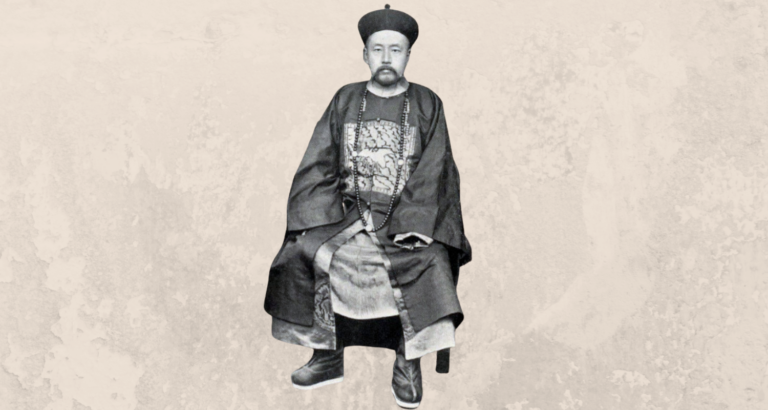
Когда я впервые узнал о Дуаньфане — моем печально известном убитом предке — я подумал, что его история — это миф, который любила рассказывать моя семья, — наша версия сказок братьев Гримм. Казалось невероятным, что мой прапрапрадед был видным маньчжурским политиком, основателем
📌 Key Highlights & Takeaways
- Когда я впервые узнал о Дуаньфане — моем печально известном убитом предке — я подумал, что его история — это миф, который любила рассказывать моя семья, — наша версия сказок братьев Гримм.
- Казалось невероятным, что мой прапрапрадед был видным маньчжурским политиком, основателем
When I first learned about Duanfang—my infamous, assassinated ancestor—I thought his story was a myth my family liked to tell—our version of the Grimm fairytales. It seemed improbable that my great-great-great grandfather was a prominent Manchu politician, had founded a university, visited America, stood doggedly against foot binding, and was killed by his own army. But after my grandmother took me to the Metropolitan Museum of Art to see his bronze artifacts in the Asian Art wing, and after my cousins traveled to China to learn about our apparent shared ancestor, I realized that this famous politician from the late 1800s was in fact, related to me.
And then, I immediately wanted to write about him.
But despite the myriad accomplishments listed on Duanfang’s Wikipedia page, I still didn’t know who he really was. What emboldened him to accomplish so many things in such a short lifetime? Who was he to his family? To his children?
I learned a key part of Duanfang’s story my senior year of college, when I went to my Chinese history professor’s office hours. We were sitting in a carpeted room the size of a closet when she told me my ancestor’s biggest secret: he actually wasn’t Manchu. He was biologically Han Chinese, and had only pretended to be Manchu to rise in power during the Manchu Dynasty. And rise in power he did—becoming one of China’s most preeminent and powerful politicians until he was eventually forced into retirement. A few years later, the Han rebelled against the Manchus in what would become the Xinhai Revolution. Duanfang left retirement to once again prove his worth. It was then that he was ironically killed by his own Han army, who mutinied against him. My Chinese professor told me that as Duanfang pleaded for his life, he revealed his true ethnicity to them. Of course, the Han army didn’t believe him—thinking that he was lying to avoid death. They beheaded him anyway. She told me the army presented his head to his family, who became destitute after Duanfang’s death. And so, I realized my ancestor wasn’t simply a politician, a before-his-time feminist, or an avid bronze collector. He was also a liar. He was ambitious to a fault.
I was struck by Duanfang’s clear flaws and the dire and long-term consequences of his great yet dangerous ambition.
A few years later, more intrigued than ever, I talked to Professor Elya Zhang from the University of Rochester after she responded to my cold email.
Professor Zhang noted that my ancestor was her first “academic love,” who, like Icarus, had flown too close to the sun. He wanted to be someone history remembered, and that’s likely why he created the first kindergarten in China and traveled to America to meet with international diplomats. Professor Zhang described him as charismatic and charming around others but introverted and detail-oriented when he was alone; everything about his work and travels was meticulously documented in his journals. She told me that after he died, some of his colleagues—despite being Manchus—actually maintained their positions of power. With that in mind, if he had stayed in retirement, if he had bided his time, he would have lived. He could have even become more powerful and politically prominent than he already was. And perhaps then, my family wouldn’t have sold his antique collection to curators around the world, perhaps we wouldn’t have immigrated to Taiwan, and then America, perhaps I wouldn’t be writing this today.
As a writer, I was struck by Duanfang’s clear flaws and the dire and long-term consequences of his great yet dangerous ambition. It got me thinking: what do we all do to succeed? Morally, what do we give up? Who do we pretend to be?
Editorial Text & Content Analyzer
Analyze real-time word count, reading speed, and text density metrics on the fly.
Source: Literary Hub.
Read the full story at the original source ↗
For questions: mrsmithcons@gmail.com.
❓ Frequently Asked Questions (Author Craft Briefing)
What core principle or progressive framework underpins this Author Craft guide?
Whether analyzing biomechanical motor recruitment for bodyweight leverage or structural narrative arcs in fiction, success relies on progressive progressive mastery of foundational fundamentals.
How should practitioners structure their training or reading schedule?
Implement structured 4-to-6 week periodization blocks with scheduled deloads or chapter deconstructions to ensure optimal neuromuscular and cognitive retention.
What common misconceptions should beginners avoid?
Avoid rushing into advanced progressions or skipping thematic world-building; foundational volume builds the tendon resilience and conceptual depth required for mastery.
📖 Full Essay Manuscript & Author Commentary
Complete uncut narrative text, historical footnotes, and reading guides.
⚡ Read Full Manuscript ➔More from SkyFree Chronicles

 💎 LuxeLiving 768
Этот таунхаус на Манхэттене стоимостью 80 миллионов долларов когда-то был частным гаражом Пола и Банни Меллон
Бывший генеральный директор Morgan Stanley Джон Мак и его жена Кристи Мак превратили бывший каретный сарай в в...
 ✈️ SkyFree Club
Награды IHG One Rewards Milestone: как получить повышение класса люкс и доступ в зал ожидания
Программа IHG One Rewards Milestone Rewards позволяет вам выбирать такие привилегии, как подтвержденное повыше...
Don't Buy Top 5 Seamless Halter Gym Tops For Support Before Watching This! - Halter Yoga Vest, Shockproof Running Sports...
Best Top 5 Seamless Halter Gym Tops for Support deals on AliExpress: 1. Sexy Halter Neck Beautiful Back High W...
 🌿 SkyFree Living
Крошечный дом Ники и Джуди в Кейп-Бретоне с лифтом для собак выставлен на продажу
Крошечный дом Howling Dog Construction, который мы представили в 2017 году, с лестницей для хранения, гостевым...